

 AI-Powered
 Preventing Forklift Accidents with Rocking Slab Stabilization
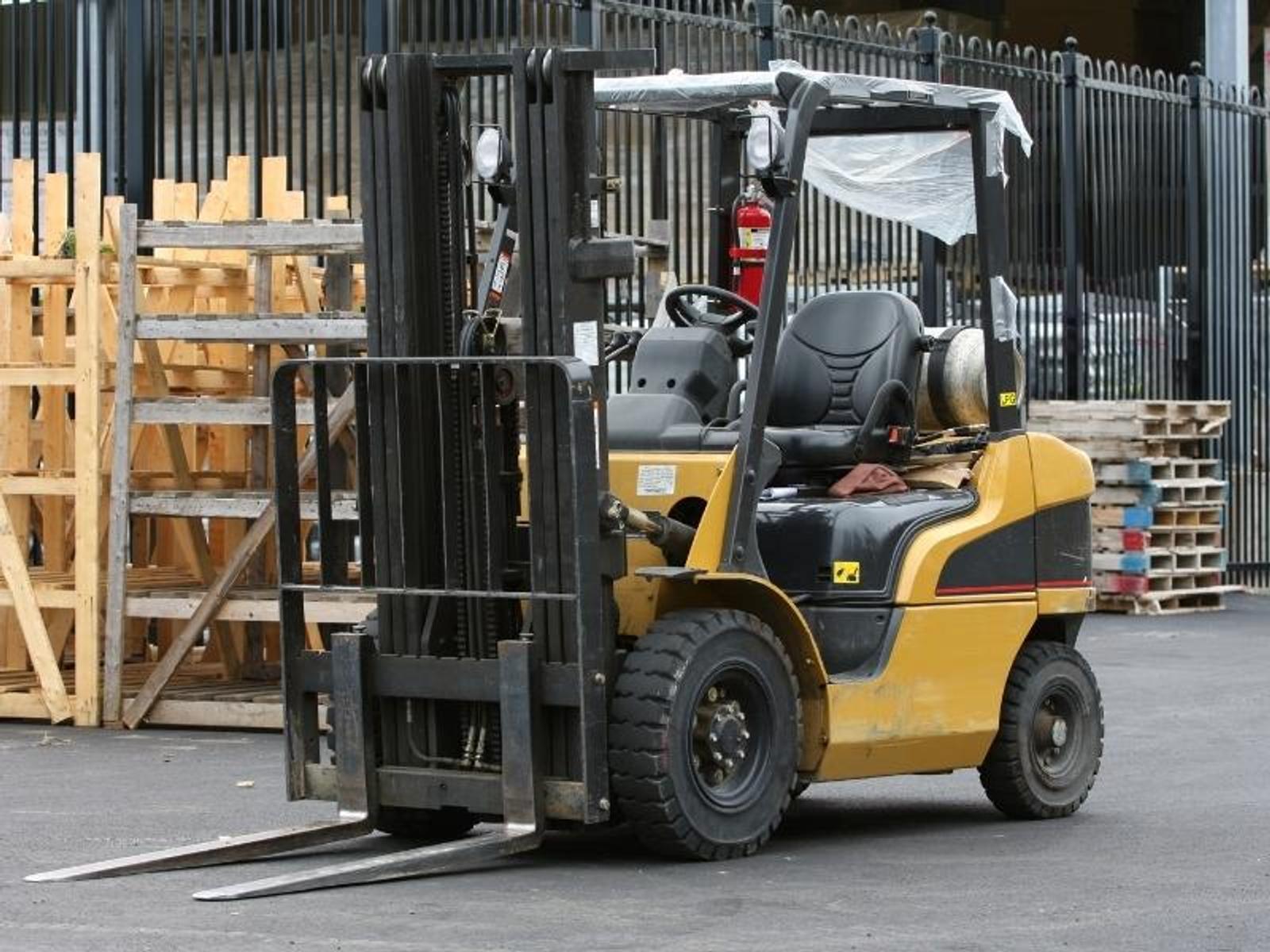
When Floor Instability Disrupts Operations
Running a commercial or industrial business is hard work and that’s without even considering building maintenance. The effects of uneven, rocking slabs can be costly: equipment damage, loss of inventory, operational inefficiencies, and more. The solution? Stabilize your rocking slabs with Groundworks. Commercial or industrial facility owners and managers should continue reading to learn the signs and risks of rocking slabs, and how Groundworks can help with minimally disruptive rocking slab stabilization.
Why Do Rocking Slabs Happen?
Rocking concrete slabs occur when the soil beneath them can no longer provide consistent support. Over time, soils may settle, shift, or wash out due to moisture changes, erosion, or repeated loading from daily operations. When this support is compromised, voids can form beneath the slab, leaving sections of concrete partially unsupported. As forklifts, pallet jacks, or other heavy equipment travel across the floor, the slab may rock or shift under the load, creating noticeable movement and potential safety concerns.
Risks for Rocking Slab Development
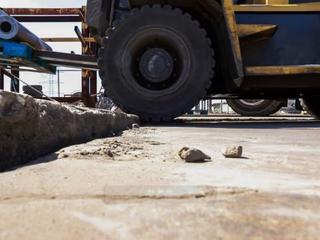
Rocking slabs are typically easy to visualize, with visible movement occurring during the movement of equipment. Forklift or machinery operators may even be able to feel the movement of the slab happening beneath them. Before a slab begins to visibly rock under equipment, there are often subtle changes in the concrete surface and surrounding areas that signal developing issues. Facility owners and managers should look for these signs:
- Floor Cracks: Cracks in concrete floors may indicate subsurface soil changes.
- Uneven Joints: The joints where concrete slabs meet should be smooth and even. When uneven, they create trip hazards and point to shifting soils beneath the concrete.
- Gaps: Gaps between walls and floors are typical when floors sink.
- Sinking Floors: Sinking, settled, uneven floors may be the result of soil loss or movement below the slab.
- Soil Loss: Soil loss can be hard to visualize, especially beneath a concrete floor. However, it may be visible around the perimeter of the building foundation.
- Slab Curl: High heat can cause slabs to contract at the ends, curling up. These slabs no longer have soil connection. Look for slabs that have variation from the center to the edges in height, whereby the center of the slab is typically lower than the edges. Facilities in hot climates are especially susceptible to slab curling.
All of these signs of settlement may be precursors to rocking slabs.
Rocking Slab Stabilization from Groundworks
Groundworks stabilizes rocking concrete slabs by addressing the underlying cause of the problem: loss of soil support to the slab. Using small, carefully placed injection points, a high-density polyurethane is injected beneath the slab to fill voids and restore consistent support. As the material expands, it eliminates movement and restores soil connectivity with the slab without the need for excavation.
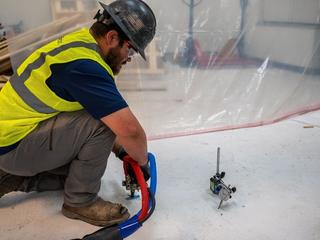
Because this process is fast-curing and minimally disruptive, stabilization can often be completed in hours rather than days. Floors can return to service the same day, helping facilities avoid extended downtime and operational interruptions. Once stabilized, the slab is better equipped to support heavy equipment, improve safety for personnel, and reduce future maintenance demands.
By stabilizing rocking slabs early, facilities can minimize safety risks, limit liability concerns, and protect their long-term investment. With proven methods and extensive experience in commercial environments, Groundworks delivers reliable solutions that restore floor stability and keep operations moving forward.