

 AI-Powered
 Restore Soil Stability for Bridge Abutments
Groundworks provides bridge abutment stabilization using polyurethane injection to strengthen and densify soils, prevent the loss of fines, and maintain infrastructure integrity. Our targeted, fast-application solution is ideal for tight or remote locations.
Strengthening Bridge Abutments with Polyurethane
Groundworks’ bridge abutment stabilization uses polyurethane injection to reinforce soils and prevent erosion, effectively managing drainage impacts. This quick, adaptable method ensures minimal disruption and lasting stability, even in challenging locations.
Polyurethane Injection for Bridge Abutment Stabilization
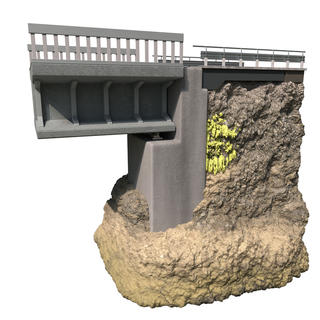
Our bridge abutment stabilization process uses polyurethane injection to densify and strengthen compromised soils behind the abutment. The polyurethane is injected directly through the abutment, filling voids, sealing the soil, and preventing the loss of fines due to drainage. This adaptable solution can be used in remote or restricted spaces, supporting various soil types for a resilient infrastructure base.
Indicators Your Bridge Abutment Needs Stabilization
Soil erosion and instability behind bridge abutments can impact structural integrity. Look for these signs to identify the need for stabilization.
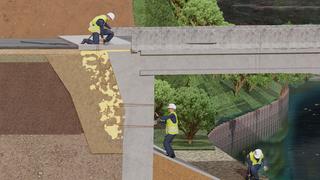
- Soil Erosion Around Abutments: Indicates soil displacement from drainage issues.
- Loss of Fine Particles: Persistent erosion of soil fines may suggest weakened support.
- Cracking or Separation in Abutment Structure: Shifting or settling soil may cause visible structural changes.
- Standing Water Near Abutment: Excessive drainage can erode supporting soils.
- Visible Voids or Sinkholes: Voids behind abutments point to significant soil loss.
Benefits of Bridge Abutment Stabilization
Groundworks’ bridge abutment stabilization solution secures critical infrastructure, providing government agencies with a fast, minimally disruptive approach to maintain abutment integrity.
- No Excavation Required: Polyurethane injection stabilizes soils without the need for disruptive excavation.
- Quick and Efficient: The fast application minimizes downtime and restores abutment support.
- Strengthens Soil Base: Expanding polyurethane densifies soils, enhancing load-bearing capacity.
- Ideal for Tight or Remote Spaces: Suitable for hard-to-access locations or confined spaces.
- Effective for All Soil Types: Works with various soil conditions, adapting to the needs of the site.
Enhance Infrastructure Stability with Groundworks’ Bridge Abutment Stabilization Solutions.
Products We Use
Polyurethane Injections
Injected through the abutment, polyurethane stabilizes the soil, fills voids, and prevents fine particle loss, creating a strong, resilient base that withstands drainage-related challenges.
What We Do
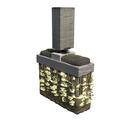
The polyurethane expands upon injection, filling gaps and densifying soils behind the abutment to stop erosion and improve soil load capacity.
How It Works
Groundworks’ bridge abutment stabilization provides a fast, minimally invasive solution for strengthening critical infrastructure. Ideal for government projects, it secures abutments in high-traffic or remote areas with long-lasting stability.
Case Studies

Solutions for Diverse Industries
From government projects to industrial facilities and commercial developments, Groundworks delivers engineering-led foundation solutions to tackle the toughest challenges across a wide range of sectors.


Names You Know Trust Groundworks with Their Toughest Foundation Issues







We want to learn about your project.
FAQs
Polyurethane is injected through the abutment to fill voids, densify soils, and stop fine particle loss due to drainage issues.
It’s effective for all soil types and suitable for remote or hard-to-reach areas.
The polyurethane stabilizes the soil by binding it and stopping erosion, countering the effects of drainage on fine particle loss.
Its ability to stabilize, fill voids, and adapt to various soil conditions makes it effective for bridge infrastructure.
Yes, polyurethane injection is fast, minimizing downtime and ensuring efficient stabilization.