AI-Powered
 Cliffside Hotel Groundwater Mitigation
The Challenge
A cliffside hotel was experiencing groundwater intrusion due to its location on a mountainside.
The Solution
Groundworks installed approximately 1400 gallons of polyurethane to form a grout curtain barrier.
The Impact
Successful groundwater interception from Groundworks.
 Location: Carmel, California
 Project Type: Multi-Residential
 Repair Type:
 Project Background
The Hyatt Carmel-by-the-Sea is constructed directly into a coastal hillside, with four multi-story buildings embedded along the face of a cliff. While architecturally distinctive, this configuration exposed the structures to persistent groundwater migration originating from higher elevations of the mountain.
Groundwater traveling down the slope was infiltrating CMU retaining walls and floor slabs in multiple lower-level units. A previous attempt using a two-component polyurethane system had not resolved the issue, leaving ownership in need of a more reliable and comprehensive solution.
Groundworks was retained to design and install a grout curtain system capable of intercepting groundwater at the cliffside interface and restoring long-term performance to the building envelope.
The Challenge
Groundwater migration affected 4 cliffside buildings.
The complexity of the project extended beyond groundwater control. The property consisted of four buildings ranging from two to three stories in height, with approximately 42 affected units. Portions of the resort remained fully operational during construction, requiring careful coordination and sequencing.
Local noise ordinances further constrained the work. Drilling activity was restricted to a limited morning window, with no noise permitted after 9:30 a.m. The solution would need to be installed efficiently, precisely, and with minimal disruption to hotel operations.
In addition, the presence of hollow CMU block walls, mortar joints, and irregular void pathways created a complex infiltration network. Effective mitigation required more than localized plugging — it required the formation of a continuous groundwater interception barrier across multiple elevations.
Key Facts
4
Buildings
14 Day
Installation Time
42
Units Affected
1400
Gallons of Polyurethane
The Engineering Approach
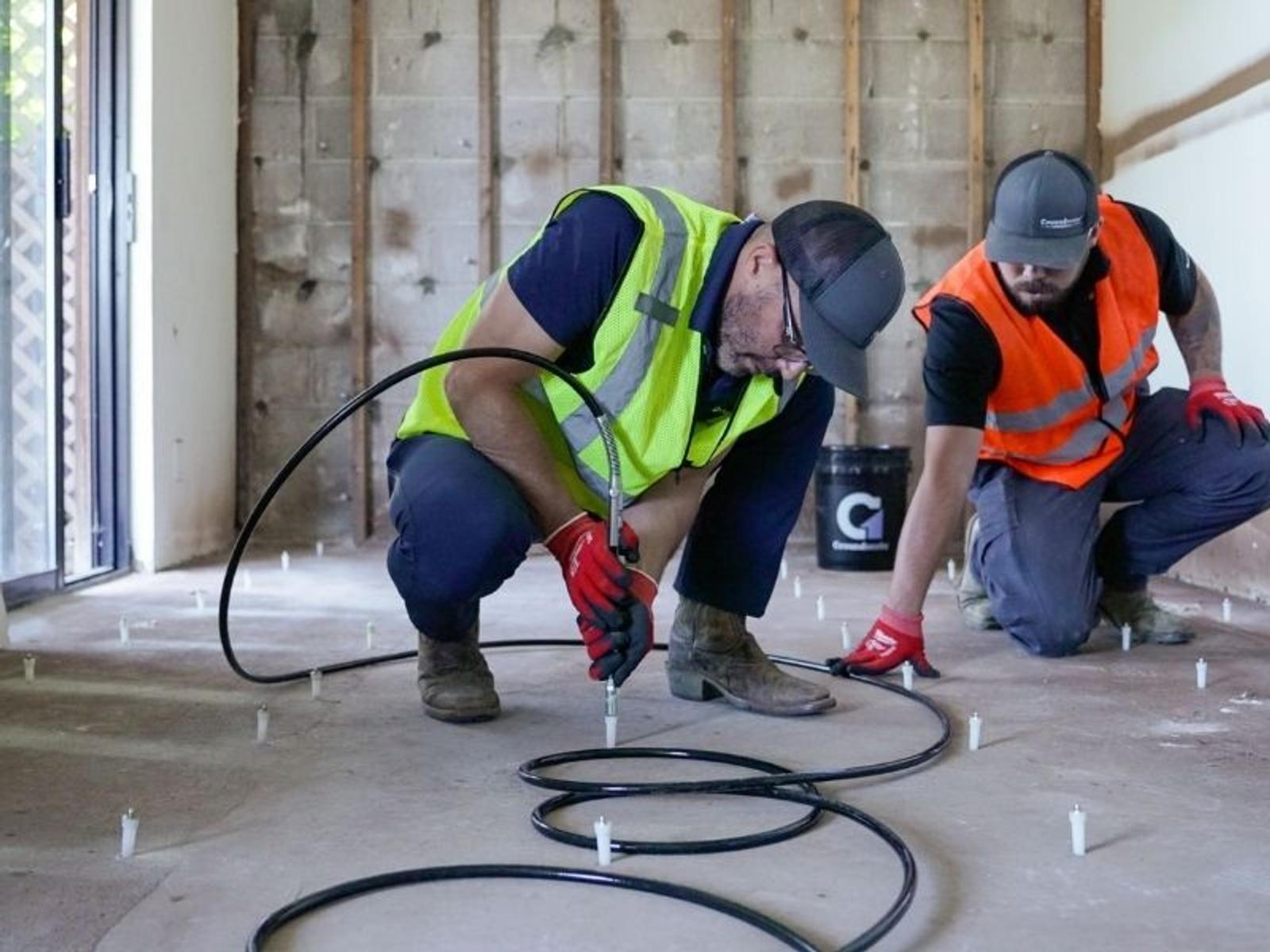
Groundworks implemented a moisture-activated single-component polyurethane grout curtain system along the cliffside interface. Injection ports were installed through CMU walls and floor slabs on an 18-inch grid pattern, beginning at the lowest elevation and progressing upward to ensure complete vertical coverage.
The single-component polyurethane was selected specifically for its ability to react in the presence of active groundwater. Rather than relying solely on chemical mixing, the material leveraged existing moisture within the wall and soil mass to trigger expansion. This allowed the foam to migrate through CMU block cores, mortar joints, and subsurface voids before expanding and forming a hydrophobic barrier.
Approximately 1,400 gallons of polyurethane were installed over a 14-day period. A six-person crew executed drilling during a tightly controlled three-hour window each morning, followed by injection and cleanup operations throughout the remainder of the day. A gas-powered injection system enabled efficient mobilization and adaptability within the constrained work environment.
Operational Coordination
Although affected units were vacant during treatment, upper portions of the resort remained active. Work sequencing was structured to maintain hotel operations while advancing the curtain installation building by building.
By progressing methodically from the lower floors upward, the team ensured continuous coverage along the cliffside interface while minimizing disruption to the property’s daily activities.
The Solution
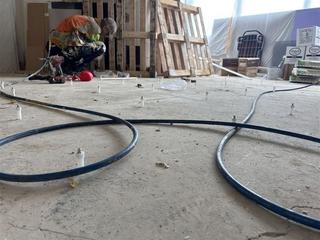
Grout curtain wall installation to prevent groundwater infiltration.
Groundworks installed a single-component polyurethane grout curtain to intercept groundwater migrating along the cliffside interface. Injection ports were installed through CMU walls and floor slabs on an 18-inch grid pattern, allowing the material to penetrate block cores, mortar joints, and subsurface pathways where water was traveling.
The moisture-activated polyurethane expanded in the presence of groundwater, sealing infiltration points and forming a continuous barrier between the hillside and the building envelope. Installation progressed from the lowest floor upward through each structure to ensure complete vertical coverage across the affected areas.
Approximately 1,400 gallons of polyurethane were installed over a 14-day period, creating a subsurface curtain designed to prevent groundwater from entering the structure while minimizing disruption to the property.
Why Single-Component Polyurethane?
In groundwater-driven applications such as this, material mobility and moisture activation are critical. The selected single-component polyurethane system provided the ability to travel through irregular CMU void networks before reacting, allowing for more comprehensive coverage than the previously attempted two-component system.
Its controlled expansion characteristics reduced the risk of over-pressurization within finished wall assemblies, while its hydrophobic properties established a durable subsurface barrier designed to intercept ongoing groundwater migration.
This approach transformed a localized infiltration issue into a continuous curtain solution.
The Impact
Successful groundwater interception from Groundworks.
The grout curtain system successfully mitigated groundwater intrusion across all treated buildings. By intercepting migrating groundwater along the cliffside interface, Groundworks restored the performance of the building envelope without requiring extensive demolition or structural alteration.
The project was completed within 14 days, under strict municipal constraints, and without interruption to overall resort operations.
The Hyatt Carmel-by-the-Sea now benefits from a continuous subsurface groundwater interception system engineered specifically for its unique hillside condition.
Trusted by Industry Leaders Nationwide
Leading brands across government, commercial, and industrial sectors choose Groundworks for their most challenging projects.