AI-Powered
 Boeing Edwin Watts Warehouse Floor Stabilization
The Challenge
When Boeing acquired an 80,000 square foot warehouse from Edwin Watts Golf, they intended to retrofit the building into a military parts warehouse. They discovered that a 12,000 square foot portion of the floor had settled as much as 6 inches in places and required stabilization before retrofitting could continue.
The Solution
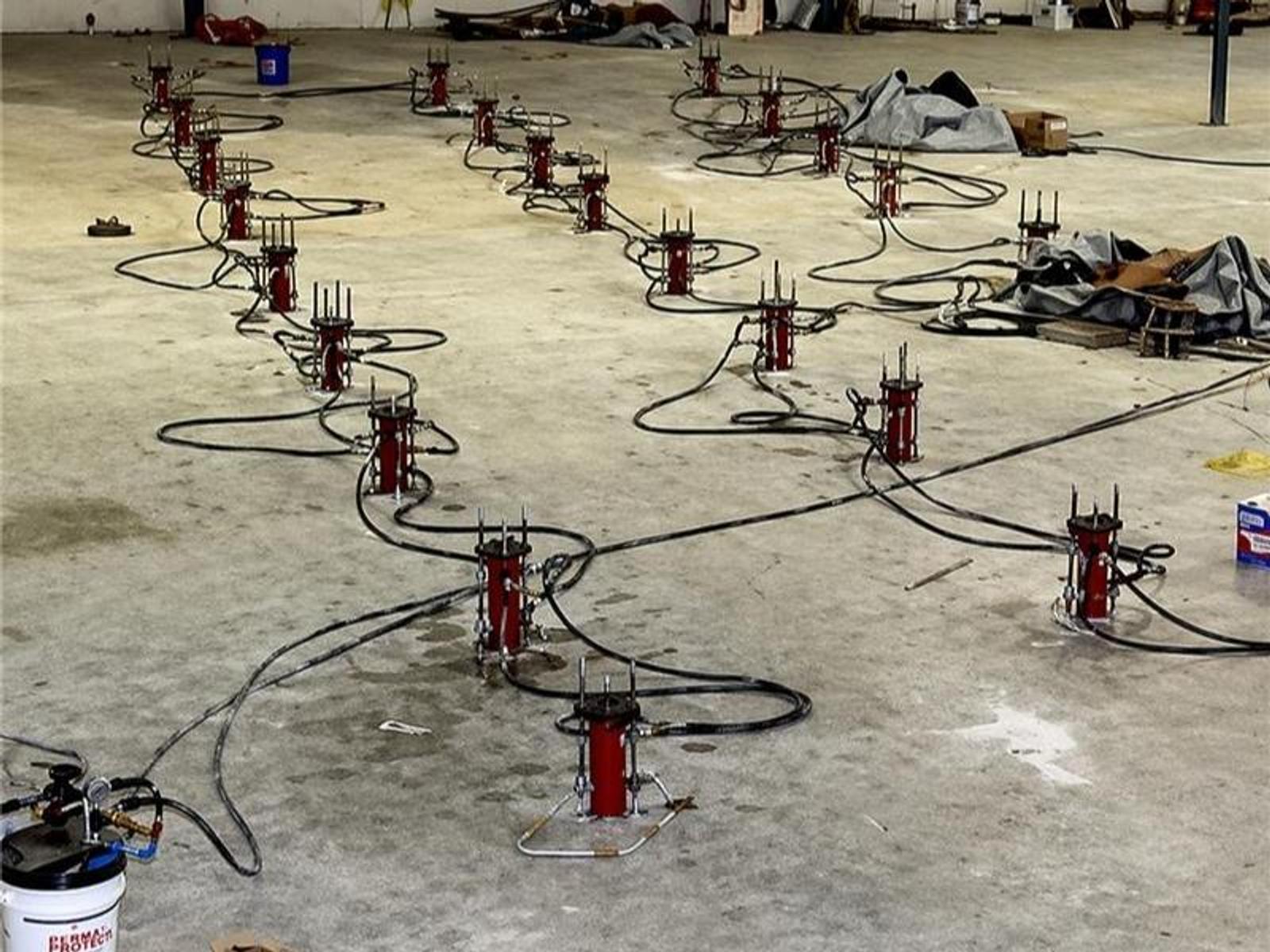
Push piers were installed beneath the slab to provide adequate lifting and permanent support. Polyurethane was also injected to fill the voids beneath the slab floor.
The Impact
Following installation, the settled slab was successfully stabilized and lifted back toward its intended elevation, restoring functionality across the affected 12,000 square foot area.
 Location: Fort Walton Beach, Florida
 Project Type:
  Repair Type:
 The Challenge
12,000 sq ft of floors were settled.
The Boeing Company acquired a 80,000 square foot warehouse from Edwin Watts Golf. Boeing planned to convert the commercial distribution warehouse into a military parts facility. However, a 12,000 square foot portion of the concrete slab floor had settled as much as 6 inches and would have to be stabilized and lifted before renovations could begin.
A geotechnical investigation, which included ground penetrating radar and soil borings, showed loose fill soils under the existing slab. Additionally, the original building called for a 6 inch floor slab; however, upon further inspection, the settled portion of the slab was found to be an average of 14 inches thick. The cause of the settlement was determined to be a combination of the additional concrete weight and the weak, surficial bearing soils.
Key Facts
80,000 Sq Ft
Warehouse
12,000 Sq Ft
of Settlement
122
Push Piers
5100 Pounds
of Polyurethane
The Solution
Push piers and polyurethane were used to support the floors.
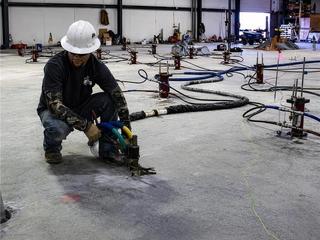
A system of hydraulically driven push piers was selected to permanently stabilize and lift the settled slab. Slab pier locations were laid out in grid patterns with a maximum spacing generally less than 8 feet. 8-inch diameter core holes were made through the floor to allow for bracket installation. 122 slab piers were installed to an average depth of 30 feet and an average pressure of 3200 psi (drive force of 30 kips). The slab piers were connected in series with hydraulic cylinders to uniformly raise the floor back toward level. Polyurethane foam was then injected under the slab to fill voids.
The Impact
The floors were raised to their intended elevation.
Following installation, the settled slab was successfully stabilized and lifted back toward its intended elevation, restoring functionality across the affected 12,000 square foot area. The installation of 122 push piers provided deep, load-bearing support, transferring the weight of the slab beyond the weak surface soils and into more competent strata.
To further enhance stability, approximately 5,100 pounds of polyurethane were injected beneath the slab to fill voids and densify the underlying soils. This process helped eliminate gaps created by settlement while providing additional support to the slab system.
Together, these solutions created a stabilized and supported floor system capable of withstanding the demands of the facility’s new use. By addressing both the underlying soil conditions and the effects of settlement, the project provided a long-term solution that allowed Boeing to move forward with renovations and confidently repurpose the structure into a military parts facility.
Trusted by Industry Leaders Nationwide
Leading brands across government, commercial, and industrial sectors choose Groundworks for their most challenging projects.