

 AI-Powered
How Voids Cause Rocking Slabs in Commercial Facilities
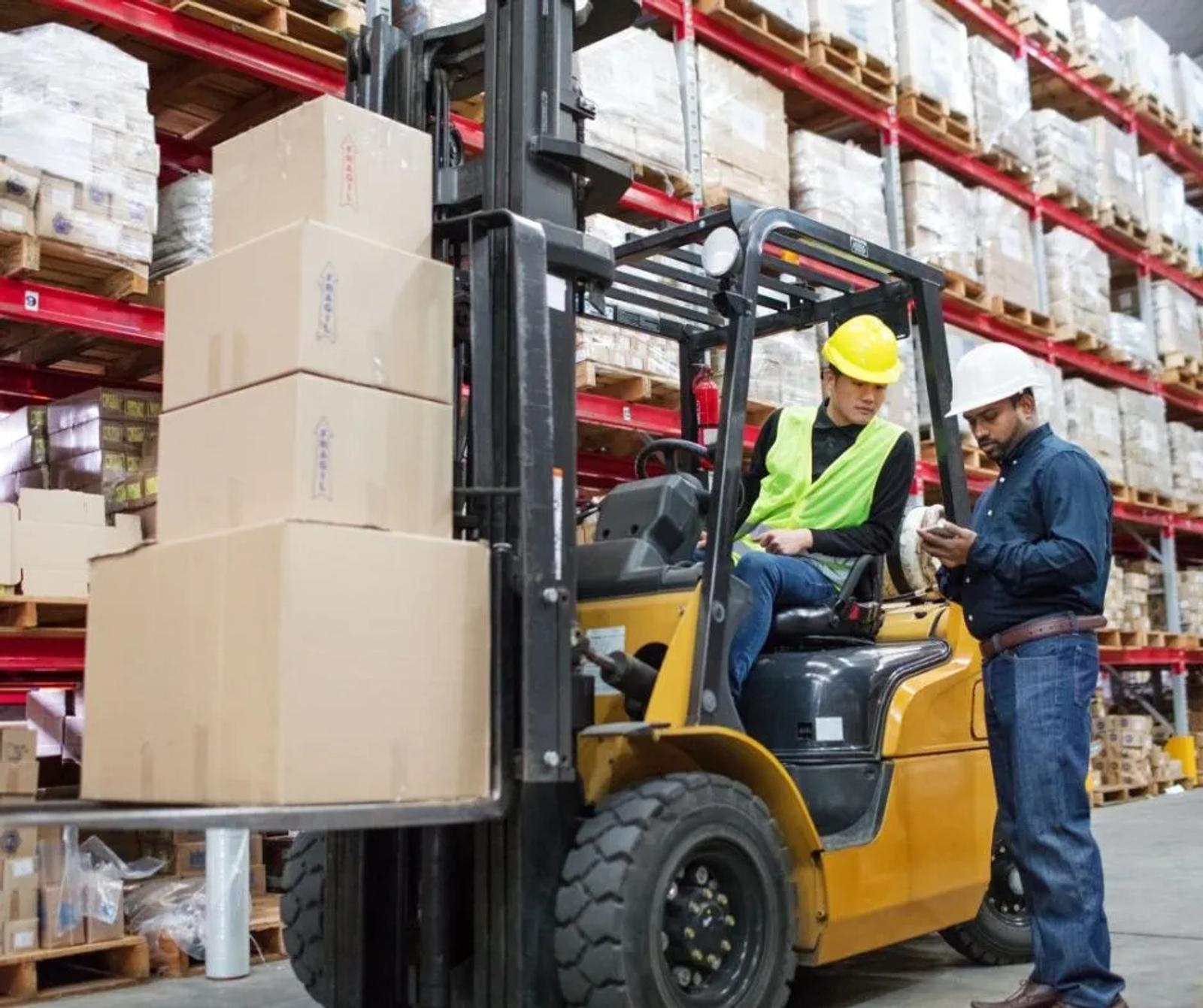
To the dismay of commercial facility owners everywhere, the rocking slab isn’t concrete with a cool mohawk and tattoos that listens to Metallica. A rocking slab is a concrete panel that moves back and forth when pedestrians walk across it or forklifts drive over it. Despite the cool name, a rocking slab is a serious concern for facilities such as factories, warehouses, ports, distribution centers, and manufacturing plants. That movement is often a symptom of a much larger problem developing below the surface: soil loss and the formation of voids beneath the concrete. Continue reading to learn how these hidden voids develop, why they cause slabs to rock, and how Groundworks can restore stability without replacing the existing concrete.
Why Rocking Slabs Are a Problem for Commercial Facilities
Rocking slabs may seem like an isolated flooring issue, but their impact can extend throughout an entire commercial facility. Whether they occur in warehouses, manufacturing plants, distribution centers, ports, retail properties, or other industrial environments, unstable concrete can compromise safety, reduce operational efficiency, and increase maintenance costs.
Safety and Liability Risks
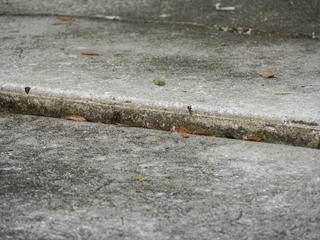
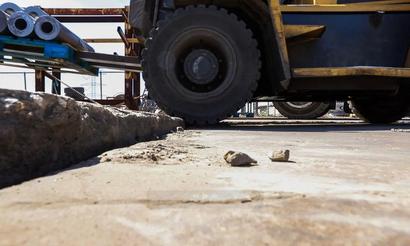
When a concrete slab rocks under foot traffic or vehicle loads, it creates an unstable walking and driving surface. Employees, customers, contractors, and visitors are more susceptible to slips, trips, and falls, while forklifts, pallet jacks, and other equipment may experience unexpected movement as they travel across the affected area.
Equipment Wear and Operational Disruptions
Repeated movement places additional stress on forklifts, carts, automated equipment, and material handling systems. Over time, the constant impact can contribute to premature equipment wear, increase maintenance requirements, and disrupt daily operations. In facilities where productivity depends on smooth, uninterrupted traffic flow, even a single rocking slab can become a recurring operational concern.
Escalating Maintenance Costs
Rocking slabs rarely improve on their own. As voids beneath the concrete continue to grow, slab movement often becomes more pronounced, increasing the potential for cracking, joint deterioration, and additional floor damage. The rocking slab may also cause loads to fall off pallet jacks and forklifts. Addressing the underlying cause early can help prevent more extensive repairs and reduce long-term maintenance costs.

How Rocking Slab Stabilization Works
Rocking slabs are rarely the result of damaged concrete alone. In most cases, the movement occurs because voids have developed beneath the slab, leaving portions of the concrete unsupported. Each time pedestrians, forklifts, or heavy equipment travel across the surface, the slab deflects into these empty spaces before returning to its original position. Over time, this repeated movement can enlarge the voids, increase stress on the concrete, and accelerate deterioration.
Groundworks stabilizes rocking slabs by restoring continuous support beneath the concrete using polyurethane injection. Small injection holes are strategically drilled through the slab, allowing polyurethane to be delivered directly into the voided areas below. The material fills the empty spaces and reestablishes contact between the slab and the supporting soils, eliminating the movement caused by unsupported sections of concrete.
Because the process requires only small injection points and avoids extensive demolition or excavation, stabilization can often be completed with minimal disruption to normal facility operations. Once the slab is fully supported, the rocking motion is eliminated, helping improve safety, reduce additional concrete deterioration, and restore confidence in the facility’s walking and driving surfaces.
Why Groundworks?
Rocking slabs are more than an inconvenience/ They’re an indication that the concrete has lost the support it was designed to rest on. Left unaddressed, the continued movement can increase safety risks, accelerate concrete deterioration, and disrupt day-to-day operations.
Groundworks helps commercial property owners restore stability without the cost and disruption of removing and replacing otherwise serviceable concrete. Using polyurethane injection, our team addresses the underlying voids responsible for slab movement, helping facilities return to safe, reliable operation with minimal downtime.
If you’ve noticed concrete moving beneath foot traffic or heavy equipment, don’t wait for the problem to grow. Contact Groundworks to schedule an evaluation and learn whether polyurethane injection is the right solution for stabilizing your facility’s rocking slabs.