AI-Powered
 Are Foundation Cracks Normal?: 5 Types to Look For
Foundation cracks are a common concern for homeowners, but not all of them indicate serious structural damage. However, it’s still important to be vigilant. If you see a crack in the wall or floor, it could be a sign of something more serious going on beneath the surface.
Understanding the difference between harmless surface cracks and those signaling deeper issues can help protect your home’s stability and value. In this article, we’ll explore how to spot and handle foundation cracks. View pictures of normal foundation cracks and learn the benefits of timely foundation repair.
5 Types of Normal Foundation Cracks
Foundation cracks aren’t exactly “normal” for homes to experience. Rather, they are a common type of foundation problem.
Here’s a list and photos of the five most common types of foundation cracks you may notice around your home.
1. Horizontal Cracks
What They Look Like
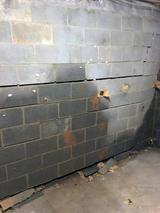
Horizontal cracks look like lines that run left to right or right to left.
Where They Appear
These cracks are typically on a basement or foundation wall. They usually form in the middle of the wall, appear to run parallel to the floor, and accompany inward wall bowing (which can be seen here.
What Causes Them
These cracks result from hydrostatic pressure created by saturated, expanding clay soil.
Soils rich in clay soil are often the most problematic because they expand and contract between periods of rain and drought, pushing against your foundation. This continuous movement takes its toll on walls, which will show signs of damage in the form of horizontal cracks and bowing.
2. Vertical Cracks
What They Look Like
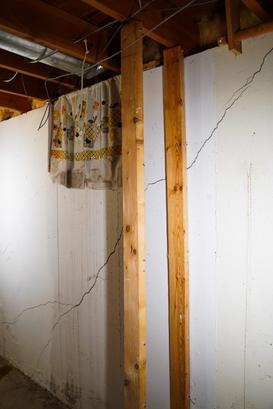
These cracks are the opposite of horizontal cracks, as vertical cracks span up and down.
Where They Appear
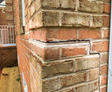
Vertical cracks can form along poured concrete basement walls, exterior walls, in drywall, and around door frames, like what is pictured here.
What Causes Them
In areas where drought is more common, the soil shrinks as it dries, putting inward pressure on your foundation. Shrunken soil cannot support your foundation and home, and it will start to settle into the ground. As the foundation moves downward, vertical cracking will become visible in the basement and on upper walls. Vertical cracks can also appear if the foundation has heaved.
3. Stair-Step Cracks
What They Look Like
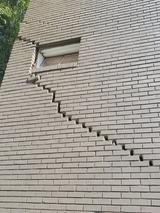
These cracks look exactly like they sound. They follow a pattern resembling stairs along a wall, and they can sometimes look like a March Madness bracket.
Where They Appear
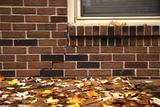
Stair-step cracks typically form along the mortar joints in brick or concrete block walls. These cracks are more visible on exterior brick walls, which can be seen here. Stair-step cracks usually start near a horizontal crack and spread up or down a wall.
What Causes Them
As with vertical cracks, settling soil and foundation settlement are the roots of stair-step cracks. These cracks, in particular, indicate the foundation is settling unevenly.
4. Diagonal Cracks
What They Look Like
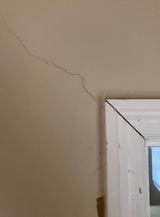
Diagonal cracks show up at an angle on walls. They can be deep and appear gaping or as thin, hairline normal foundation cracks.
Where They Appear
They are most common in drywall and along the corners of door and window frames, like what is pictured here.
What Causes Them
An unevenly settling foundation resulting from unstable soil is also at the heart of these types of cracks.
5. Slab Floor Cracks
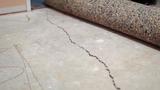
What They Look Like
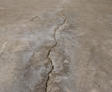
Like diagonal cracks, floor cracks can be thin and spreading, or deep in the concrete.
Where They Appear
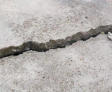
As the name implies, these cracks are found in your concrete slab floor, typically in the basement.
What Causes Them
It doesn’t take much moisture for clay soil to expand. When this happens, it can push upwards and against the concrete slab. This causes the slab floor to heave, bulge, and crack, typically in the middle.
Warning Signs Related to Foundation Cracks
Sometimes, foundation wall cracks are accompanied (or preceded) by other foundation problem signs. They show up in small ways inside and around your home—especially when water, soil, or moisture are the cause. If you notice any of the signs below, it could mean foundation cracks are already forming or about to form.
Musty Smells or Damp Odors
A musty smell in your home—especially in the basement or crawl space—often points to excess moisture and possible mold. Over time, that dampness can weaken wooden beams and other structural supports, making your home less stable.
Pests in Your Basement or Crawl Space
Moist, dark spaces attract pests like termites, rodents, and fleas. Once they move in, they’re tough to remove unless the underlying conditions are addressed. These pests can do real damage to wooden framing and insulation, making foundation issues worse over time.
Erosion Around the Exterior of Your Home
If you notice bare patches, washed-out soil, or sinking areas around your foundation, water may be pooling too close to your home. This can happen due to poor drainage, missing or clogged gutters, or improper grading. Over time, water against your foundation walls can lead to dangerous cracks and instability.
Signs of Water Damage Indoors
Inside your home, uneven floors, stuck doors and windows, or water stains on walls and ceilings may all be connected to foundation movement. When the soil shifts or moisture levels rise, your home’s framing can twist and warp, throwing everything off balance.
These issues often happen before—or right alongside—foundation cracks. They’re your home’s way of warning you that it’s time to investigate what’s happening beneath the surface.
How to Repair Cracks in Foundation
When spotting a crack in foundation walls or floors, it’s common to want to slap a bandage on the problem with quick cosmetic fixes like caulk or other sealants. But these are temporary solutions that will not solve the problem. The cracks will only continue to worsen and accompany other damage.
As we described above, the soil underneath and around your home is the main culprit, so it’s important to address this root cause. Professionally installed solutions that bypass or take the soil out of the equation include:
Customized to meet your home’s unique repair needs, these solutions permanently stabilize your foundation, prevent any further movement, and help correct foundation cracks.
Contact Groundworks to Fix Cracks in Foundation
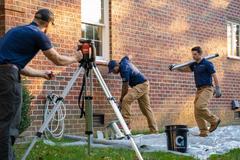
Foundation cracks can be complex. What looks like a small floor or wall fissure at first glance might end up being a dangerous structural problem. Because of clay soil, it’s not a question of if the walls will crack, but when. Vigilance is crucial to repairing and protecting your home, and it’s important to be ready to quickly act.
Groundworks is eager to be your partner in foundation repair. Our expert team has many years of experience with addressing foundation cracks and other damage.
To get the process started, simply contact us to schedule a free inspection and no-obligation repair estimate. Together, we can help you create the safe and stable living environment you deserve.
Foundation Cracks FAQs
Ignoring foundation cracks can lead to various problems that can become costly both in terms of money and health. The cracks can become more extensive, jeopardizing the structural integrity of the entire foundation. Other risks include water infiltration, mold growth, and pest intrusion. All these issues can endanger your family’s safety and decrease the overall value of your home.
If there is a hairline crack – also known as dormant or shrinkage cracks – in your foundation wall or concrete, it usually is harmless. These cracks typically form within the first two years after your house is built and it naturally settles into place. However, when you see significant cracking like large, spreading cracks, this is a bigger issue that needs to be addressed by foundation repair professionals.
DIY fixes are not the answer. To get to the root of the problem, repair professionals need to inspect your foundation. Depending on where the cracks are, what they mean, and the extent of the damage, your house could benefit from a variety of solutions. For example, if your house is settling, helical piers will be used to stabilize and potentially lift it. For significant wall issues, repairs like wall anchors or beams can be used as reinforcements.
Related Resources