

 AI-Powered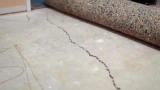
A slab foundation, also known as a slab-on-grade foundation, is constructed by pouring a single layer of concrete directly onto the ground. It is a popular type of foundation in areas with warm climates and low soil moisture content.
The concrete slab is typically several inches thick and reinforced with steel bars to increase its strength and durability. The slab is poured directly on top of a bed of gravel or crushed stone, which helps to provide a stable base for the concrete. The edges of the slab are typically thicker to provide additional support for the walls of the building.
Types of Slab Foundations
While a slab foundation always consists of a solid concrete base, other considerations and features vary from home to home. Here are some common slab foundation types and their key features:
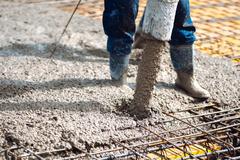
- Monolithic Slab: A single, continuous concrete pour that forms both the slab and the footing at once. These are typically thicker at the edges to support load-bearing walls. Monolithic slabs are faster and more cost-effective to construct and are common in areas with mild climates and stable soil.
- Floating Slab: A slab that “floats” on the ground without being anchored to deep footings. They can be poured separately from the footings or integrated into one pour, and the floating design allows for minor ground movement without cracking the structure. Commonly used for garages, sheds, and outbuildings.
- Slab-on-Grade: A concrete slab poured directly on the ground, with no space underneath. In this configuration, the slab is reinforced with rebar or wire mesh and often insulated. Simple and cost-effective, slab-on-grade foundations are commonly used in warm climates without frost concerns.
- Raised Slab: A raised slab sits above ground level, usually on a short perimeter wall or piers. Often used in areas with expansive or shifting soils, they provide better protection against flooding or poor soil drainage. Additionally, these slabs create a crawl space or accessible area beneath the home.
- T-Shaped Slab: A traditional foundation design for cold climates, T-shaped slabs consist of a footing poured below the frost line with a vertical wall and slab on top. The end result is shaped like an inverted “T,” hence the name. These take longer to construct due to multiple pours, but they are very durable.
How Thick is A Slab Foundation?
The exact thickness of a slab foundation is determined by factors such as building load, soil conditions, and local building codes. Generally, it ranges from 4 to 6 inches for the main body of the slab. However, the edges or footings are often much thicker, sometimes up to 12 to 24 inches, especially in monolithic and T-shaped slabs where the footing is integrated into or poured before the slab.
Slab thickness can also vary depending on the foundation style. For example, monolithic slabs are typically thicker at the edges to support structural loads. At the same time, slab-on-grade foundations tend to have a uniform thickness throughout, except where extra strength is needed. On the other hand, floating slabs may be thinner overall since they’re used in non-load-bearing applications like garages.
Advantages of Concrete Slab Foundations
Concrete slab foundations have several advantages over other types of foundations. Here are a few:
- Faster Construction
Concrete slab takes a short time to dry, and that means less downtime during construction. Your contractor won’t have to wait many days for the concrete to cure before they continue with the construction. - Cost-effective
Concrete slab foundations are generally less expensive to construct than other types of foundations, such as basements or crawl spaces. A slab foundation can save home builders up to $10,000 as they require less excavation and fewer materials. - Protection From Pests
Concrete slabs also help keep termites and other crawling insects out as there is no open space underneath your home that they can use as a staging area. - Low maintenance
Slab foundations are relatively low maintenance, as they don’t have crawl spaces or basements that require upkeep. They are also less susceptible to moisture damage and radon gas leaks because they’re watertight. - Durability
Concrete is a strong and durable material, which means that slab foundations can last for many years without needing repairs. They are also less susceptible to damage from natural disasters, such as earthquakes or hurricanes.
The Disadvantages of Concrete Slab Foundations
Concrete slab foundations, like any type of foundation, have their disadvantages as well. Here are some of the potential drawbacks to consider:
- Limited access
Since concrete slab foundations are poured directly onto the ground, no crawl space or basement provides access to plumbing or electrical systems. This can make it more challenging and costly to repair or upgrade these systems in the future. - Poor insulation
Concrete slab foundations have a limited amount of insulation, which can make them less energy-efficient than other types of foundations. This can lead to higher heating costs and colder floors in colder climates. - Susceptible to cracking
Concrete slab foundations can be more vulnerable to cracking than other foundations, particularly if the soil beneath the foundation is unstable or prone to movement. - Vulnerable to moisture damage
If the soil beneath the foundation is poorly drained or prone to flooding, it can cause moisture to accumulate beneath the slab. This can lead to moisture damage, such as mold and mildew growth, and cause the foundation to shift or settle over time. - Limited design options
Concrete slab foundations offer limited design options, as the entire foundation is essentially a single, flat layer of concrete. This can make it more difficult to accommodate certain architectural features, such as angled walls or multiple levels.
When Should You Use a Concrete Slab Foundation?
Your contractor may recommend that you use a slab foundation in any of these five situations:
- Flat Ground
If the land on which your home is built is flat, it makes sense to construct a concrete slab foundation. You might need to re-grade the land a bit if one side slopes more than the other.
- Shallow Bedrock
In some places, rock outcrops can be near the surface. This can get in the way of excavating a deeper foundation.
- High Water Table
If the water table is near the surface, it makes sense to build a home on a concrete slab foundation as this won’t involve much digging.
- Cost-Effectiveness
Construction costs money. If you’d like to bring down building costs, you can’t go wrong with a concrete slab. They’re cheaper than other types of foundations in addition to being durable and not requiring much maintenance work.
- Temperate Climates
If you experience moderate winters and mild summers, you won’t have to worry about the continuous crawl space ventilation debate. Creating a watertight seal on the ground to keep moisture out won’t reduce your utility costs.
Environmental loads and other factors can wear out the foundation and cause it to crack. If you suspect that water is entering yours, contact Groundworks for a free foundation repair inspection. We’ll dispatch our experts to seal the crack and waterproof the foundation so it remains dry all year round.