AI-Powered
 Drought-Resistant Plants and Grass for Stronger, Healthier Landscapes
Landscaping is often viewed as the “icing on the cake” that gives a property its visual appeal. However, did you know that flora, particularly drought-tolerant landscaping, can also benefit your home?
Thoughtfully planted trees, shrubs, grasses, and other landscaping elements that thrive in dry conditions can also help protect your foundation from settling and damage caused by insufficient soil moisture.
Learn more about how to choose drought-resistant grass and trees that beautify your home and safeguard its stability at the same time.
Drought-Resistant Plants for Your Yard
Drought is common across many parts of the country, with far-reaching impacts on home health and landscaping.
Whether you’re looking for color, functionality, or both, you have a variety of drought-tolerant landscaping options to choose from. This list highlights just a few of them.
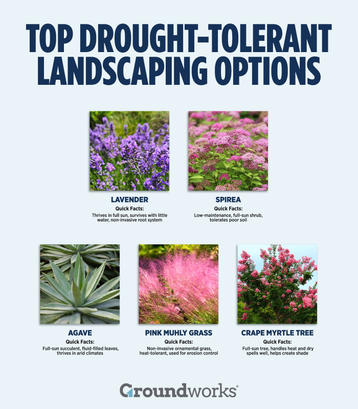
Digging Deeper into Drought-Tolerant Landscaping
Let’s take a closer look at each of these foliage elements.
As you can see, many of these drought-resistant grasses and plants grow best in the sun and tolerate dry soil. Some even help hold the soil together to avoid erosion, gaps beneath the foundation, and similar damage.
Not all low-water plants are created equal. Truly drought-tolerant species share several important characteristics, such as deep or extensive root systems that access moisture far below the soil surface; small, waxy, or silvery leaves that reduce water loss; native adaptability to regional rainfall patterns; and slow growth habits, which reduce water demand.
Other popular drought-tolerant landscaping features include:
- Junipers
- Lantana
- Catmint
- Aloe
- Buffalo grass
- Fescue grasses
- Ginko trees
- Pine trees
Choosing native plants and foliage adapted to your local climate ensures better long-term success with minimal irrigation. Before adding drought-tolerant grass or drought-resistant plants to your home, it’s best to check with local landscaping professionals.
Other Drought-Tolerant Landscaping Tips
Plants alone aren’t the ultimate solution; design and placement matter. Consider these best practices:
- Mulch Generously: Two to four inches of organic mulch dramatically reduces evaporation, keeps roots cooler, and improves soil over time.
- Improve Soil Organic Matter: Healthy soil acts like a sponge. Consider adding compost to increase water retention.
- Use Grouping (Hydrozoning): Planting species with similar water needs together prevents overwatering and underwatering.
- Consider Rain Gardens and Swales: These features capture runoff, direct water to root zones, and reduce erosion.
By combining drought-tolerant plants with smart landscaping practices, you can create a yard that stays healthy and attractive even in extended dry conditions. These strategies not only reduce water use but also support stronger root systems and more stable soil over time.
Why This Matters For Your Foundation
These landscaping features may be aesthetically pleasing, but what you’re planting and where you plant it are important considerations.
While many plants, grasses, and trees fare well in dry conditions, many have invasive roots that can grow too close to your house and cause foundation damage, including foundation settlement and wall cracks. You can learn more about these issues in our “Can Drought Cause Foundation Problems?” and “Rooted Risks: What Homeowners Need to Know About Trees and Foundations” articles.
A good rule of thumb is to plant drought-resistant plants and trees at least 10 to 15 feet away from your home. Be sure to check with an arborist or landscaper before planting.
Contact Groundworks For Drought-Related Damage Repair

If your area has experienced a drought or you want to be proactive in preventing foundation damage from dry conditions, contact Groundworks for a free foundation inspection. Our expert team conducts a thorough inspection of your home to determine the cause of damage and recommend solutions tailored to meet your home’s repair needs.
Drought and Landscaping FAQs
Drought-tolerant plants are species that can survive and thrive with minimal supplemental watering once established. They typically have adaptations such as deep root systems, small or waxy leaves, or the ability to store water, which help them conserve moisture during dry conditions. These plants are ideal for water-wise landscaping and areas prone to drought.
Extreme heat can dry out the soil around your home, especially in drought-prone areas. As the soil shrinks, it can no longer adequately support your foundation, leading to cracks, uneven floors, and settlement.
Clay soils are more problematic because they shrink when dry and swell when wet, worsening the effects of tree roots on water absorption.
Related Resources