AI-Powered
 250 Years of American Homes: How Foundations Have Changed Since 1776
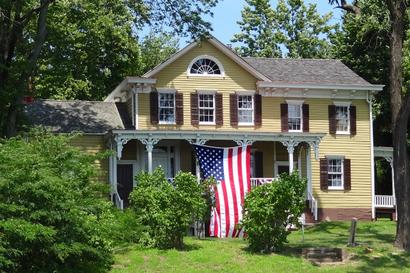
Metlar–Bodine House, Piscataway, NJ
Photo: Zeete / Wikimedia Commons
One of the clearest reflections of America’s history can be found in the foundations of its homes. Over the past 250 years, home foundations have progressed from simple stone, brick, and timber supports into highly engineered systems designed for climate, soil, moisture, and structural performance.
As America approaches its 250th birthday, we’re taking a moment to explore how foundation design has evolved alongside architecture, settlement patterns, and industrialization since 1776, and how those changes continue to shape the way we shelter our families today.
These are the houses where history unfolded, families grew, and memories were made.
- America’s First Foundations
- Timeline: 250 Years of American Home Foundations
- How Industrialization Changed Home Foundations
- How Geography Shapes Foundations Today
- Regional Foundation Comparison
- The Northeast and Midwest: Basements and Frost Lines
- The Mountain West: Frost Depth, Slopes, and Expansive Soils
- The South and Southeast: Raised Foundations for Moisture Control
- The Pacific Northwest: Rainfall, Seismic Activity, and Soil
- The West Coast: Earthquakes and Seismic Design
- Alaska: Permafrost and Extreme Freeze-Thaw Conditions
- Hawaii: Volcanic Soils, Coastal Exposure, and Seismic Considerations
- Coastal Areas: Flooding and Elevation
- Foundation Waterproofing and Drainage Practices
- What Foundations Tell Us About American Life
- The Next Chapter in American Foundations
America’s First Foundations
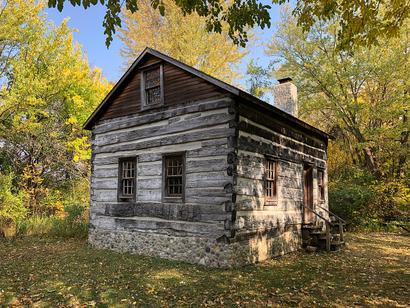
Historic Log Cabin, Bowling Green, OH
Photo: Mbrickn / Wikimedia Commons
Early American settlers often built their homes from locally available materials because transporting supplies was slow and costly.
Fieldstone, rubble stone, brick, timber posts, and piers set on stone footings were common, and some homes included partial cellars or full basements.
These early foundation systems were practical for the time. They lifted wood framing off the ground, reduced wood rot, and helped homes adapt to regional conditions.
Timeline: 250 Years of American Home Foundations
| Period | Foundation Types | Materials | Key Foundation Innovation |
|---|---|---|---|
|
1700s–Early 1800s
|
Stone footings, fieldstone foundations, cellar foundations
|
Stone, timber, lime mortar, locally sourced materials
|
Homes built using locally available materials
|
|
Mid-1800s
|
Brick and stone masonry foundations
|
Brick, stone
|
Growing towns and cities increased demand for durable construction
|
|
Late 1800s–Early 1900s
|
Brick, stone, and early concrete foundations
|
Portland cement, reinforced concrete, steel
|
Industrialization standardized building materials
|
|
1940s–1960s
|
Slab-on-grade and concrete basement foundations
|
Reinforced concrete
|
Postwar housing boom accelerated residential construction
|
|
1970s–2000s
|
Engineered basement and crawl space systems
|
Concrete, steel rebar, waterproofing materials
|
Improved building codes and soil engineering
|
|
Today
|
Region-specific engineered foundation systems
|
Concrete, steel, helical piles, drainage systems
|
Foundations are designed around climate, soil, and environmental conditions
|
New England: Stone Foundations and Cellars
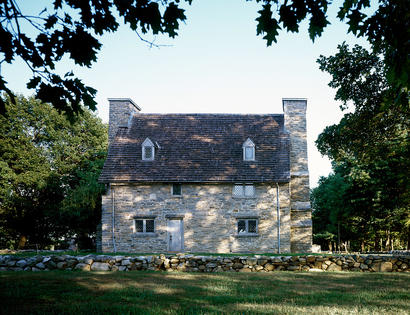
Henry Whitfield House, Guilford, CT
Photo: Carol M. Highsmith / Library of Congress
Saltbox, Cape Cod, and colonial style homes throughout the 17th and 18th centuries in New England often featured hand-stacked fieldstone foundations bonded with lime mortar. These foundations also served as below-grade cellar spaces for food storage and maintenance access.
Today, many colonial homes in Massachusetts, Connecticut, Rhode Island, Vermont, New Hampshire, and Maine still stand on their original stone foundations.
One such example is the Henry Whitfield House in Guilford, Connecticut, built in 1639, which remains one of New England’s oldest surviving homes.
In honor of America’s 250th birthday, the historic Whitfield House Rehabilitation Project is preserving and restoring portions of the home.
Navigate the home’s original stone construction through a virtual tour here.
Mid-Atlantic Colonies: Brick and Stone Foundations
Brick and stone foundation walls were common in many 18th and 19th century Mid-Atlantic homes and buildings throughout Pennsylvania, New York, New Jersey, Delaware, Maryland, and Virginia. Brick was durable, fire-resistant, and produced in many communities where clay materials were available.
Brick foundations supported farmhouses and urban row homes, remaining an important part of the region’s architectural history. As cities grew denser and families grew, masonry foundations offered more permanent solutions as houses became larger.
Many historic homes in the Mid-Atlantic still retain original brick or stone foundation walls today.
Spanish Colonial Florida and Coquina Construction
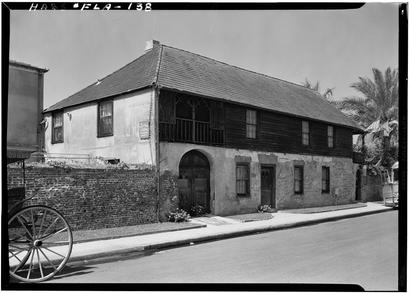
González–Alvarez House, St. Augustine, FL Photo: Jack E. Boucher / Library of Congress
Spanish colonial homes in Florida used locally available materials suited to the warm, coastal environment. One of the best-known examples is the González–Alvarez House, known as the Oldest House in St. Augustine, which combines coquina limestone walls, wood framing, and clapboard, combining Spanish colonial and later continental influences.
Although these early foundations were durable for their time, they were built before the industrialized construction methods and modernized materials that transformed homebuilding in the century ahead.
Coquina and similar masonry materials withstood humid, coastal conditions, but they still required ongoing maintenance and moisture protection.
Appalachia and Frontier Log Homes
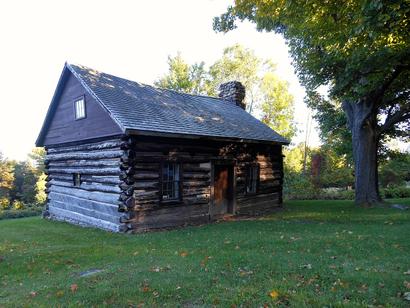
Adsit Log House, Willsboro, NY
Photo: Bryan Nelson Elder (CC BY-SA 3.0) / Wikimedia Commons
Settlers throughout Appalachia and frontier regions built homes using locally-cut timber. These log homes rested on shallow foundations that elevated the wood above damp soil and improved airflow beneath the home.
Log homes were common in parts of Kentucky, Tennessee, West Virginia, western North Carolina, and other rural frontier areas. Similar construction methods were also used in frontier settlements in parts of upstate New York and other parts of the expanding American frontier. Though simple, these homes were ideal for isolated homesteads and rugged terrain.
While many of the earliest surviving examples date to the 1600s, these building traditions continued through the 1700s and into the 1800s, shaping the foundations of homes built around America’s founding in 1776.
The Adsit Log House, built circa 1790 by Samuel Adsit in Willsboro, New York, was listed on the National Register of Historic Places in 1992 and is a surviving example of early log construction.
Southwest Adobe and Earthen Construction
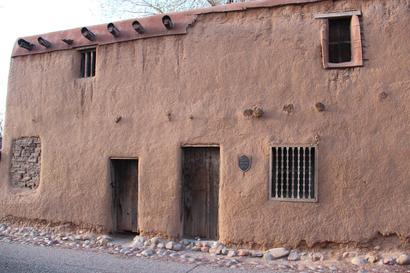
De Vargas Street House, Santa Fe, NM
Photo: Thomson200 (CC0) / Wikimedia Commons
In the Southwest, homes were built from adobe, sun-dried earthen bricks or walls made from clay, sand, soil, water, and organic fibers. These materials helped regulate indoor temperature during hot days and cool nights in the Southwest’s dry desert climate.
Adobe construction was especially common in New Mexico, Arizona, and parts of Texas and Colorado. Santa Fe’s De Vargas Street House, often called the Oldest House, is one of the best-known examples, although historians continue to debate its exact age.
Because adobe is vulnerable to moisture, these homes required regular maintenance, plaster restoration, and good site drainage. Many preserved homes throughout Santa Fe still rely on traditional plaster coatings and restoration techniques to maintain their historic integrity today.
How Industrialization Changed Home Foundations
For America’s first century, foundation construction was shaped by local materials and regional building traditions. As railroads expanded and manufacturing advanced during the late 1800s, builders gained access to steel, cement, and milled lumber that could be transported across the country. These innovations helped pave the way for stronger, more standardized foundation systems.
Victorian Homes and Urban Growth
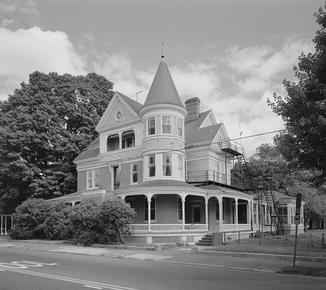
Richardson Hall, Dover, DE
Photo: Library of Congress, HABS
Victorian-style homes and buildings emerged during 19th-century industrialization, and became common throughout the Northeast and Midwest. Many were built on brick or stone foundations, while later homes (late 19th to early 20th century) incorporated concrete, as Portland cement and reinforced construction methods became more widely available.
As American cities grew denser during the Industrial Era, builders relied on stronger foundation materials to support larger, more ornate multi-story homes.
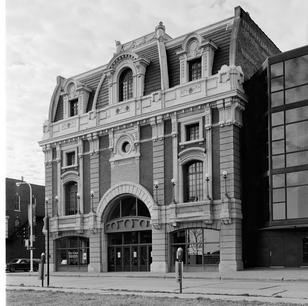
The Orpheum Theatre, Dubuque, IA
Photo: Library of Congress, HABS
The effects of industrialization extended beyond residential construction. In Dubuque, Iowa, the building, first known as the Majestic Theater in 1910, later operated as the Orpheum Theatre and is now part of the Five Flags Center, reflecting a period when standardized materials, engineering advances, and growing urban populations were reshaping American architecture.
Projects like the Majestic reflected the broader construction advances that also influenced residential foundation design during the early twentieth century.
Take a look inside the historic Five Flags Center here.
Postwar Housing and the Rise of Slab Foundations
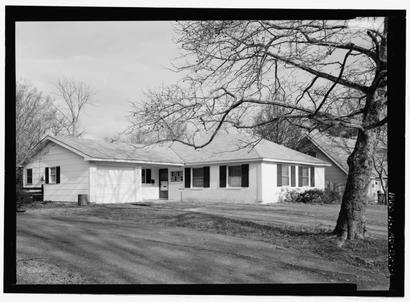
12408 Stonehaven House, Bowie, MD
Photo: Rosenthal, James W. / Library of Congress
After World War II, suburban neighborhoods expanded rapidly across the United States. Builders needed faster and more affordable methods to construct large numbers of homes, making slab-on-grade foundations more common.
These foundations were especially popular in warmer regions where deep frost protection was less necessary, reducing excavation costs and allowing homes to be built efficiently at scale.
By the mid-1900s, reinforced concrete with steel rebar became widely used for residential foundations.
How Geography Shapes Foundations Today
As engineering advanced throughout the twentieth century, builders increasingly adapted foundation systems to the unique conditions found across the United States.
Regional Foundation Comparison
| Region | Foundation Types | Primary Factors |
|---|---|---|
|
New England & Northeast
|
Basements, stone foundations
|
Frost lines and freezing temperatures
|
|
Mid-Atlantic
|
Basements, masonry foundations
|
Seasonal freeze-thaw cycles and historic construction
|
|
Southeast
|
Crawl spaces, raised foundations
|
Humidity, groundwater, and flood exposure
|
|
Florida
|
Slab foundations, raised foundations
|
Sandy soils, hurricanes, and high water tables
|
|
Great Plains & Tornado Alley
|
Basements
|
Frost protection and storm shelter needs
|
|
Mountain West
|
Basements, engineered foundations
|
Slopes, frost depth, and expansive soils
|
|
Southwest
|
Slab foundations, adobe construction
|
Dry climate and minimal frost penetration
|
|
Pacific Northwest
|
Crawl spaces, raised foundations
|
Heavy rainfall and drainage management
|
|
West Coast
|
Slabs and seismic foundations
|
Earthquake resistance and seismic design
|
|
Alaska
|
Elevated and pile foundations
|
Permafrost and freeze-thaw cycles
|
|
Hawaii
|
Reinforced concrete slabs
|
Volcanic soils, coastal exposure, and seismic activity
|
The Northeast and Midwest: Basements and Frost Lines
In colder northern climates, foundations must extend below the frost line to help prevent frost heave and soil movement. This is one reason full basements became common throughout the Northeast and Midwest.
Basements also provided additional storage space and protection for plumbing and mechanical systems during freezing weather.
Throughout the Great Plains and Tornado Alley regions, basements also became common because they provided valuable storm shelter during severe weather and tornadoes.
The Mountain West: Frost Depth, Slopes, and Expansive Soils
Across the Mountain West, including Colorado, Utah, Wyoming, Idaho, and Montana, foundation design must account for elevation, deep frost lines, varying soil conditions, and sloped terrain.
In parts of the Mountain West, homes are often built with full basements because foundations must extend below the frost line. In areas with steep grades, engineered retaining walls and specialized foundation systems help improve stability.
The South and Southeast: Raised Foundations for Moisture Control
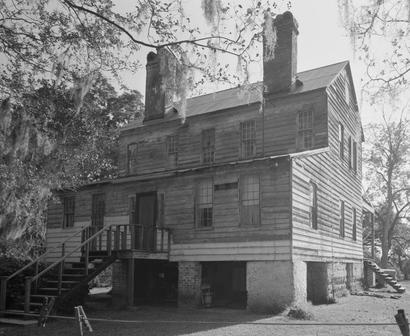
Summit House, Meggett, SC
Photo: Library of Congress, HABS
In the South and Southeast, elevated foundations were commonly used in response to the heat, humidity, and moisture. Crawl spaces, piers, and short masonry foundations allowed air to circulate beneath the home and reduced direct contact with wet soil. Raised foundations also made it easier to access plumbing, electrical, and HVAC systems.
This foundation type was especially important in Georgia, South Carolina, North Carolina, Alabama, Mississippi, Louisiana, and Florida, where moisture management was, and still is, a critical part of residential construction to reduce flood exposure.
The Pacific Northwest: Rainfall, Seismic Activity, and Soil
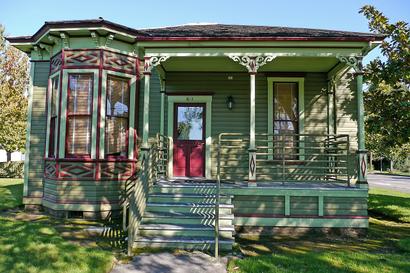
The McNail-Riley House, Eugene, OR
Photo: Rick Obst / Library of Congress
The Pacific Northwest, including Washington and Oregon, required foundation systems that handled heavy rainfall, saturated soils, and hillside construction. Builders often used crawl spaces, raised foundations, and waterproofing strategies to manage moisture.
In this region, drainage design is especially important. Poor grading, limited roof drainage, and high groundwater can all contribute to foundation problems if not addressed early.
The West Coast: Earthquakes and Seismic Design
In earthquake-prone regions along the West Coast, especially California, Oregon, and Washington, foundation design has included additional reinforcement and anchoring systems to help homes better withstand earthquakes. Modern foundations in seismic regions often include reinforcement, anchoring, and code-based retrofit strategies intended to improve performance during ground movement.
Crawl spaces and slab foundations are both common throughout many West Coast communities, with the foundation type influenced by local soil conditions, topography, climate, and seismic requirements.
Alaska: Permafrost and Extreme Freeze-Thaw Conditions
Alaska presents some of the most challenging foundation conditions in the United States. In some parts of the state, homes must be designed around permafrost, ground that remains frozen for extended periods.
Builders often use elevated foundations, piles, and specially engineered systems that help minimize heat transfer between homes and the frozen ground below.
Hawaii: Volcanic Soils, Coastal Exposure, and Seismic Considerations
Coast of Hawaii Big Island
Photo: Pedro Szekely / Wikimedia Commons
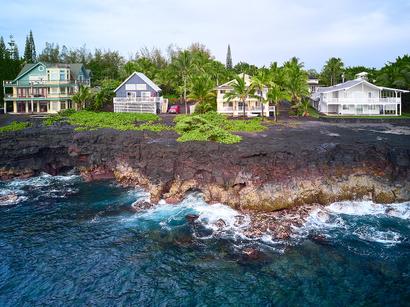
Foundation design in Hawaii is shaped by volcanic geology, coastal environments, and occasional seismic activity.
Many coastal homes in Hawaii are elevated on piers or pilings to protect against waves, erosion, and uneven volcanic terrain. Other homes are built on reinforced concrete slab foundations or shallow systems designed for local soils, moisture, and storm exposure. Coastal construction also incorporates corrosion-resistant materials and enhanced drainage to withstand salt air, humidity, and flooding.
Coastal Areas: Flooding and Elevation
Hurricane-Ready Home, Galveston, TX
Photo: Robert Kaufmann / Wikimedia Commons
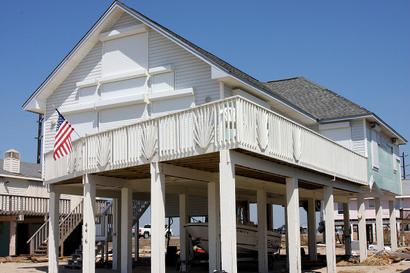
In hurricane-prone coastal regions, elevated foundations became increasingly important for flood protection and storm resilience. Homes built on piers, pilings, stilts, or raised foundations help reduce the risk of floodwater reaching living spaces during major storms.
Modern coastal construction also incorporates stricter floodplain regulations and elevation requirements to improve long-term structural safety in these vulnerable areas.
American foundations evolved as direct responses to local climate, geography, and environmental conditions. There has never been a one-size-fits-all approach to homebuilding in the United States, whether the home was built in the North where frost lines are common, or in the South where expansive soils run deep.
Foundation Waterproofing and Drainage Practices
Modern homes typically use improved drainage, waterproofing, and encapsulation systems to help manage groundwater and reduce the risk of leaks, flooding, mold, and foundation damage.
Today’s foundations often include sump pumps, vapor barriers, drainage systems, and other basement waterproofing or moisture-control measures designed around site conditions and local code requirements.
What Foundations Tell Us About American Life
Foundations reveal how American lifestyles, communities, and priorities have changed over the past 250 years.

Smaller, early American homes were often built by craftsmen using local materials. As railroads expanded, cities grew, and neighborhoods developed, homebuilding gradually shifted toward large-scale residential construction and standardized designs.
Homes became larger, more permanent, and better equipped to support changing family sizes and living standards. Indoor plumbing, heating systems, garages, and household appliances gradually became standard features as American lifestyles evolved throughout the 20th century.
Today’s homes are designed with an emphasis on comfort, energy efficiency, environmental resilience, and, for some, aesthetics.
The Next Chapter in American Foundations

As America celebrates its 250th birthday, the homes that have sheltered generations continue telling the story of the nation itself. Together, they reflect how Americans have built, adapted, and lived across generations. And as technology advances, the next generation of homes will write an entirely new chapter in the story of American construction.
Since the nation’s founding, strong foundations have helped protect the homes where Americans live, work, and build memories. Today, Groundworks is proud to help homeowners preserve that legacy with trusted foundation repair, basement waterproofing, crawl space repair and encapsulation, and concrete lifting solutions.
Curious to learn how strong your foundation is? Schedule a free foundation inspection with a Groundworks-trained and certified expert today.
Frequenty Asked Questions
Basements are common in northern regions because homes must be built on foundations that extend below the frost line; the depth at which the ground freezes during winter. Since builders already need to dig several feet underground, adding a basement is a practical and cost-effective way to create extra living, storage, or utility space. In warmer southern climates, where the ground rarely freezes, deep foundations are usually unnecessary, making basements less common.
Early American homes were typically built on foundations made of fieldstone, brick, or stacked stone set with lime mortar. In colonial times, these materials were readily available and durable enough to support wooden-framed structures. By the late 19th and early 20th centuries, poured concrete and concrete block foundations became more common, offering greater strength, consistency, and resistance to moisture.
Concrete foundations became widely used in the United States during the early 1900s, particularly between 1900 and 1930. Advances in Portland cement production, improved construction methods, and the growing popularity of reinforced concrete made it a practical and affordable alternative to stone and brick foundations. By the mid-20th century, poured concrete and concrete block foundations had become the standard for most new residential construction.