

 AI-Powered
 How Our Soil Stabilization Solutions Resolve Unstable Ground Problems
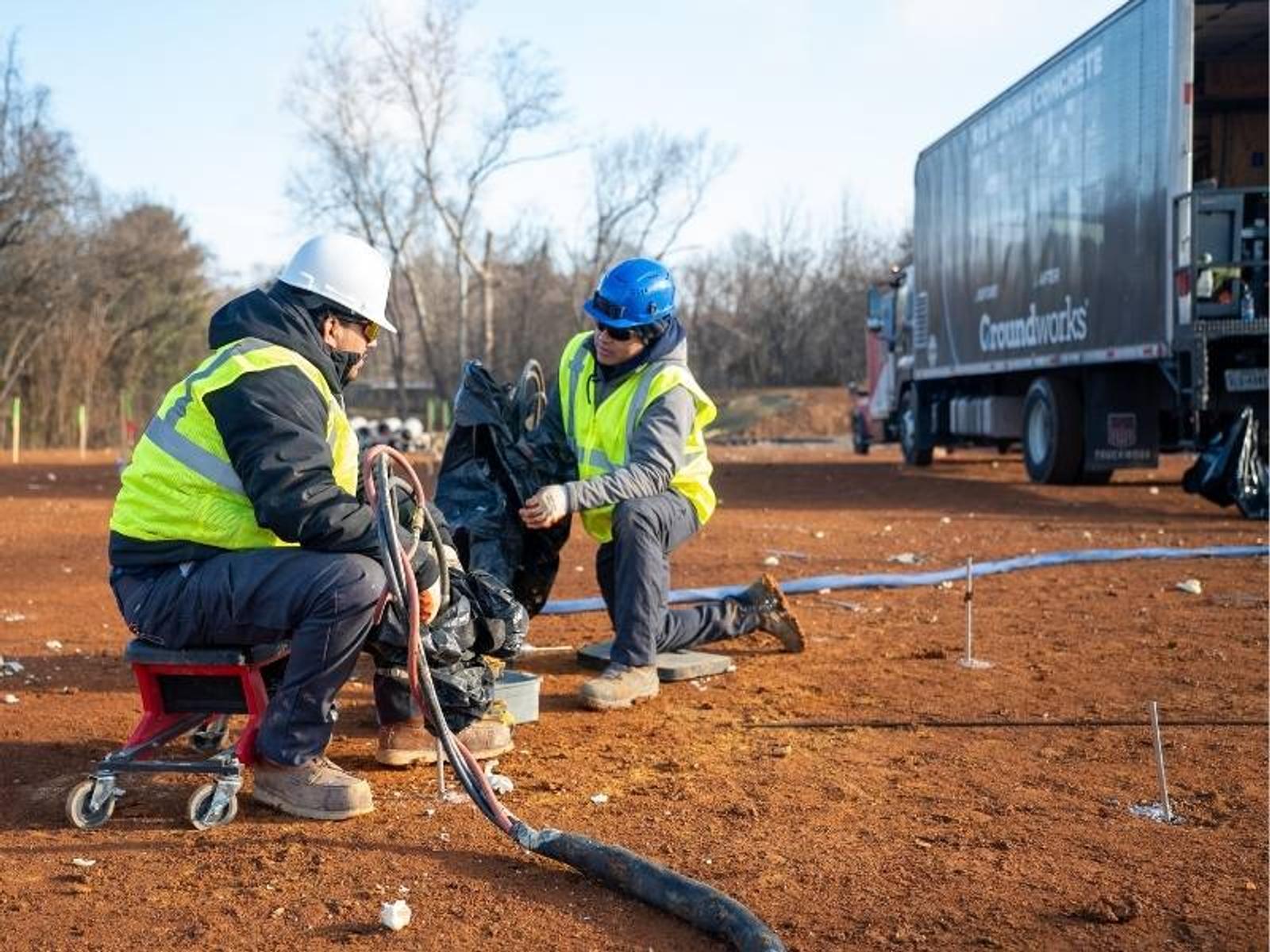
Unstable ground can negatively impact the structures above, from sinkage and cracks to structural damage. Unstable ground isn’t just loose dirt or erosion; it’s a problem that impacts commercial, government, and industrial facilities, underground infrastructure, and so much more. Resolving ground instability leads to stronger buildings and less damage to surrounding structures. Continue reading to learn the signs of ground instability and how Groundworks can help create more solid ground.
Signs of Ground Instability
Ground instability has many faces, including:
- Poor Compaction: Poorly compacted soils can result in structural shifts and damage, differential settlement, and erosion.
- Erosion: Erosion from under buildings can cause them to settle. You may see erosion channels where rainwater creates gulleys around the building, or soil loss around the perimeter of the foundation.
- Structural Damage: The ground beneath a building may be unstable or shifting if there are signs of structural damage in the building. Floors may be uneven, cracked, or the flooring may be lifting or breaking. There may be gaps between the walls and floors, or windows and doors that no longer close as intended. There may also be cracks in the walls or new trip hazards.
- Inconsistent Soil Conditions: Whether there is an existing building on the property or a new construction is being erected, inconsistent soil conditions can result in structural shifts over time.
How Groundworks Stabilizes Unstable Soil
When unstable ground threatens a structure, the solution must address the root cause, not just the symptoms. Groundworks offers advanced soil stabilization solutions designed to strengthen weak soils, fill voids, and restore support beneath structures.
Polyurethane Injection for Soil Stabilization
One of the most efficient methods for stabilizing soil is polyurethane injection. This process involves injecting engineered polyurethane beneath the surface through small, strategically placed holes.
As the material expands, it fills voids, compacts loose soils, and increases load-bearing capacity. This method is ideal for:
- Stabilizing weak or loose soils
- Filling voids caused by erosion or washout
- Lifting and leveling settled concrete slabs
- Sealing out water intrusion in certain applications
Polyurethane injection is fast-curing, lightweight, and minimally disruptive, making it well-suited for projects where downtime must be limited, such as warehouses, manufacturing facilities, and roadways.
Deep Foundation Solutions
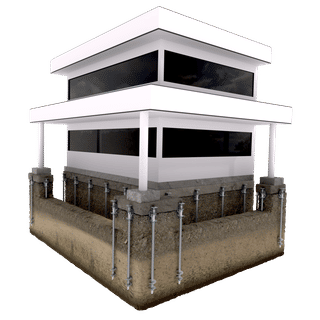
In cases where surface soils cannot provide adequate support, deep foundation systems are used to transfer loads to more stable soils at greater depths.
Groundworks installs solutions such as:
- Helical piers for underpinning existing structures or supporting new construction
- Push piers to stabilize and lift settled foundations
These systems are designed to bypass weak, near-surface soils and anchor into more competent layers below, providing long-term stability even in highly variable ground conditions.
Grout Curtain Walls for Water Control
Water intrusion is often a major contributor to soil instability. Groundworks can install grout curtain walls using polyurethane injection to create a barrier that limits water movement through soils.
By reducing water infiltration, this solution helps prevent further erosion and soil loss, protecting both the structure and the surrounding ground.
Why Early Intervention Matters
Unstable ground conditions rarely improve on their own. In fact, they often worsen over time as water movement, loading conditions, and environmental factors continue to impact the soil.
Addressing these issues early can:
- Prevent costly structural repairs
- Reduce safety risks such as trip hazards and uneven surfaces
- Minimize downtime for commercial and industrial operations
- Extend the life of existing infrastructure
Stabilize Your Site with Groundworks
Unstable soil doesn’t have to compromise your structure. With the right approach, weak ground can be strengthened, voids can be filled, and long-term performance can be restored.
Groundworks combines advanced technology with field-proven solutions to address complex soil conditions across commercial, industrial, and infrastructure projects.
Contact Groundworks today to learn how our soil stabilization solutions can help you build on solid ground.