

 AI-Powered
 How Rocking Slabs Negatively Affect Warehouses

What is a “Rocking Slab”?
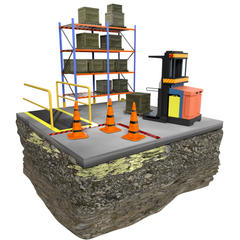
“Rocking slabs” might sound like a lighthearted phrase, but in reality, they’re a warning sign of deeper issues. When warehouse floors shift under load, it often means settlement or soil loss has occurred beneath the concrete. What seems like a minor nuisance can quickly escalate into safety risks, maintenance headaches, and increased repair costs for facility managers. Why is a rocking slab more than a nuisance? What issues can a moving concrete slab cause? In this article, we’ll explain the risks that come with rocking concrete slabs in warehouses and how Groundworks can mitigate the problem.
Why Rocking Slabs Negatively Impact Warehouses
Rocking slabs, also called moving concrete slabs, can lead to a whole host of issues for the businesses that are run within warehouses. Here are some of those issues:
- Forklift Accidents: Rocking slabs create unstable surfaces that increase the risk of forklift incidents. As heavy equipment carrying loads of inventory travels across uneven concrete, the slab’s movement can cause the forklift to tilt. The result may be damaged inventory, tipped forklifts, or even serious employee injuries.
- Trip Hazards: When concrete slabs shift, even small height differences between panels can create dangerous trip points. For employees walking across the warehouse floor, these irregular surfaces increase the risk of falls, which can lead to sprains, fractures, or other workplace injuries.
- Litigation: Whether forklift accidents or trips and falls, both can result in injuries, which can then lead to lawsuits. If a business is aware of uneven or unstable flooring but fails to address it, they may be held legally liable for resulting damages.
- Operational Costs and Downtime: Rocking slabs accelerate wear on forklifts, racks, and other equipment, while also forcing repeated floor repairs. Over time, this not only drives up maintenance costs but can also lead to costly downtime as sections of the warehouse become unsafe or unusable.
Rocking Slab Stabilization from Groundworks
Groundworks Commercial provides a proven solution to stabilize rocking slabs by addressing the problem at its source: the soil. Through small, strategically drilled access points, a specialized polyurethane is injected beneath the slab. As the material expands, it fills voids, bonds soil layers together, and reestablishes uniform support.
Because the process requires no excavation and cures quickly, stabilization can often be completed in a matter of hours. This means warehouse floors are restored to service the same day, minimizing disruption to daily operations. The result is a stable, level floor that supports both heavy equipment and safe foot traffic, reducing long-term risks and maintenance costs.
Stabilizing rocking slabs eliminates the hazards of forklift accidents, employee trip injuries, liability exposure, and costly downtime, all while protecting the warehouse’s bottom line. For facilities facing these challenges, Groundworks Commercial has the expertise and proven solutions to restore stability and keep operations running smoothly.