

 AI-Powered
 Liquefaction Mitigation with LiqueLock™ for Earthquake Prone Areas
Why Soil Stability Matters in Earthquake Zones
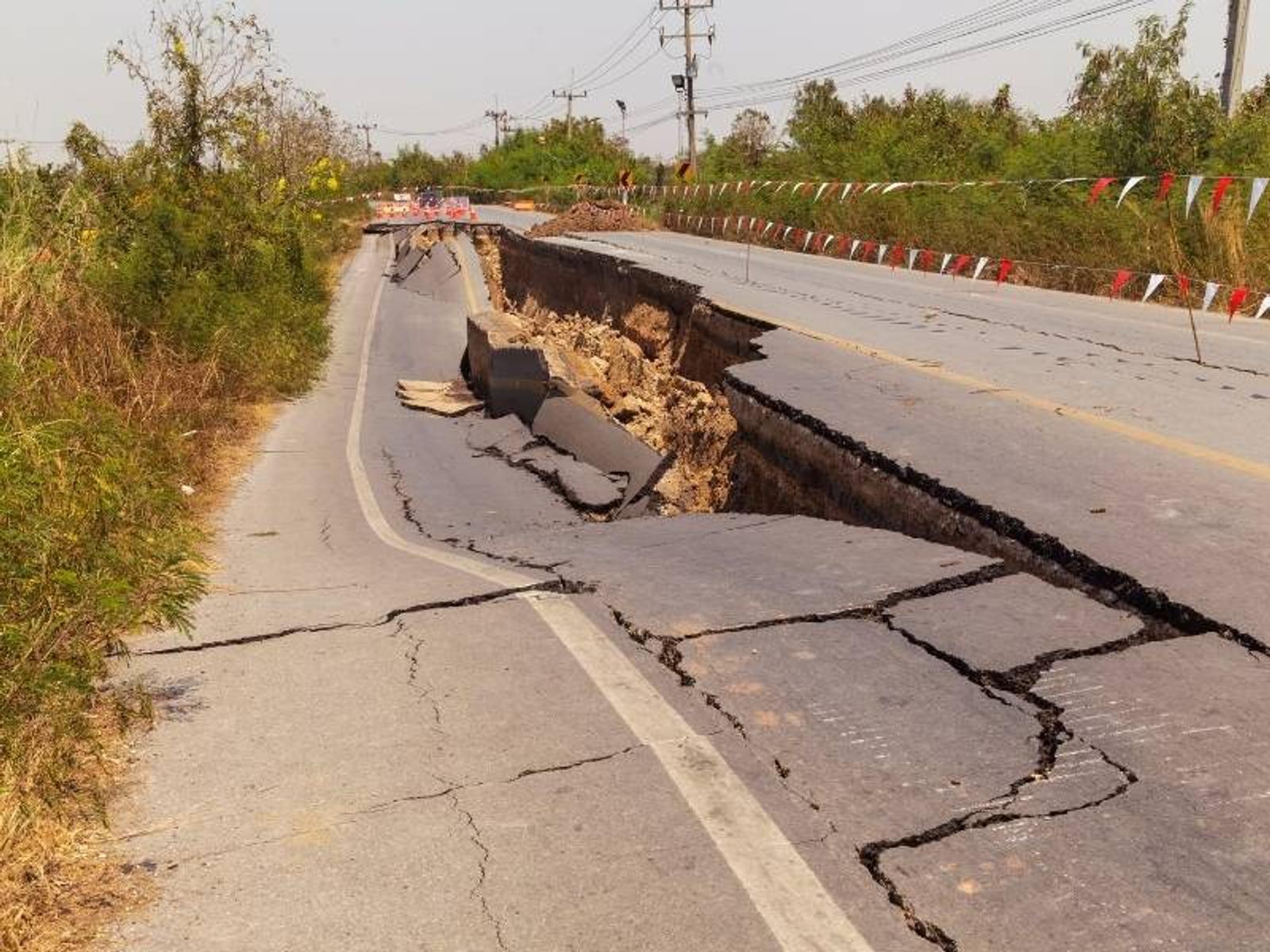
Earthquakes are unpredictable, striking at any time and leaving massive amounts of damage in their wake. The cost of earthquake damage is high, with resulting losses in the billions and that’s only in the United States. One method of mitigating damage isn’t done by changing building structures, but instead by stabilizing the soils below them. At Groundworks, we offer Liquefaction Mitigation with our patented product known as LiqueLock™. This service helps prevent the movement of the soils beneath structures, resulting in more stable and structurally sound buildings, even after earthquakes. Let’s break down why soil liquefaction happens and how our LiqueLock™ service can help protect commercial and industrial buildings in areas with high seismic activity.
Soil Liquefaction Risk Factors
Soil liquefaction doesn’t just happen anywhere. This type of soil movement typically only occurs in earthquake prone regions, particularly those in close proximity to seismic fault lines, where strong ground vibration is more likely. Areas with high groundwater levels or saturated soil conditions are particularly vulnerable. This is because excess water pressure can build rapidly during an earthquake, causing soils to temporarily behave like a liquid and lose their ability to support structures. Non-coherent soil layers are also a risk factor. Loose, granular soils such as sands and silts are susceptible, as they lack cohesion and strength when subjected to seismic forces.
Liquefaction Mitigation with LiqueLock™
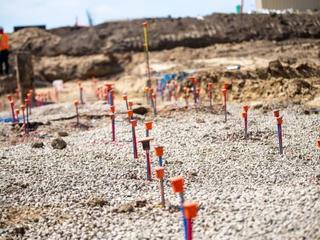
Our comprehensive stabilization service using the LiqueLock™ solution can mitigate the unwanted effects of soil liquefaction during seismic events. The process works by injecting polyurethane into the high-risk areas of soil. After injection, the product expands into loose soils, filling both small gaps and large voids.
According to the ASCE paper from 2023 that verifies the efficacy of the LiqueLock™ process; “During injection, the polymer also permeates into the surrounding sand. On curing, cementation occurs along the surface as the sand mixes with the polymer into a solidified outer shell. Due to the polymer injection and expansion, the surrounding sand is displaced and thus experiences an increase in lateral confinement and relative density.”
The Benefits of Groundworks’ LiqueLock™ Service
The use of LiqueLock™ can enhance the stability and resilience of commercial and industrial buildings during earthquakes. According to the research sited by the American Society of Engineers, the LiqueLock™ process greatly reduced the effects of liquefaction in the soil where it was applied. “A significant reduction in the foundation settlement was observed due to combined effects of increased liquefaction resistance, increased ground stiffness and strength, and the composite (hardened polymer and solidified sand) below the foundation providing load paths for the foundation load toward the lower, more competent strata,” (ASCE, 2023). The process is swift and minimally disruptive, typically only requiring a day or less to cure. Additionally, the product is injected directly into soil, without any excavation. The soil layers are up to 90% stronger immediately after injections, and the polyurethane is long-lasting, offering peace of mind. Injection patterns can be tailored to the ground conditions of your specific facility, offering a custom solution based on your needs. It’s even ideal for high load soil applications, reinforcing the ground around heavy structures.
Why Groundworks?
Groundworks’ patented LiqueLock™ system provides commercial and industrial facilities with a targeted solution for mitigating soil liquefaction risks in seismic regions. By stabilizing soils beneath existing structures, LiqueLock™ helps reduce soil movement during earthquakes without the need for excavation or major disruption.
Backed by experienced geotechnical professionals and site-specific evaluations, Groundworks delivers reliable solutions designed to protect structures, operations, and long-term performance. If your high-risk facility (such as a hospital, school, airport or other major government infrasructure) is located in an earthquake-prone area, contact Groundworks today to schedule an evaluation and learn how LiqueLock™ can help reduce liquefaction risks before the next seismic event.