

 AI-Powered
 Post Design Reinforcement for Structural Modifications
For some buildings, the structural demands of their foundations change. When these demands increase, requiring more load support than originally designed, they may need something called post design reinforcement. Post design reinforcement is the process of strengthening an existing structure to increase load-bearing capacity, correct settlement issues, or accommodate new structural demands. Let’s dive into why it’s necessary, and how our post design reinforcement service works.
Why Post Design Reinforcement May Be Necessary
Post design reinforcement is an excellent option for buildings that:
- Where additions are being added
- Have undergone a change in use and must bear greater loads than originally designed
- Are experiencing foundation settlement or shifting soils that reduce structural capacity
- Were built under older building codes that no longer meet current load requirements
- Show signs of structural distress, such as cracking walls, uneven floors, or misaligned doorways and windows
- Are supporting newly installed heavy equipment or storage systems that increase point loads
- Require stabilization following soil loss, erosion, or changes in groundwater conditions
Post Design Reinforcement from Groundworks
When post design reinforcement is needed to reestablish or increase structural support, Groundworks offers multiple solution options. These methods can be used individually or in combination, depending on the structural demands and site conditions. Below are the primary Groundworks approaches to post-design reinforcement:
Polyurethane Injection:
During polyurethane injection, high-density polyurethane is injected into the soils beneath the structure. The material expands within the soil matrix, filling voids and exerting pressure on surrounding soils. This process densifies loose or poorly compacted soils, improves soil strength, and increases load-bearing capacity, helping the ground better support structural loads while reducing the risk of future settlement and extending the service life of commercial structures.
Foundation Underpinning:
During underpinning, foundation piers are installed at targeted locations along the structure’s foundation where additional support is needed. The piers are advanced to deeper, more stable load-bearing strata, where they can redistribute structural loads to competent soils or bedrock at significant depth. By bypassing weak or unstable near-surface soils, underpinning helps restore support and improve the foundation’s overall load-bearing capacity.
Carbon Fiber Reinforcement:
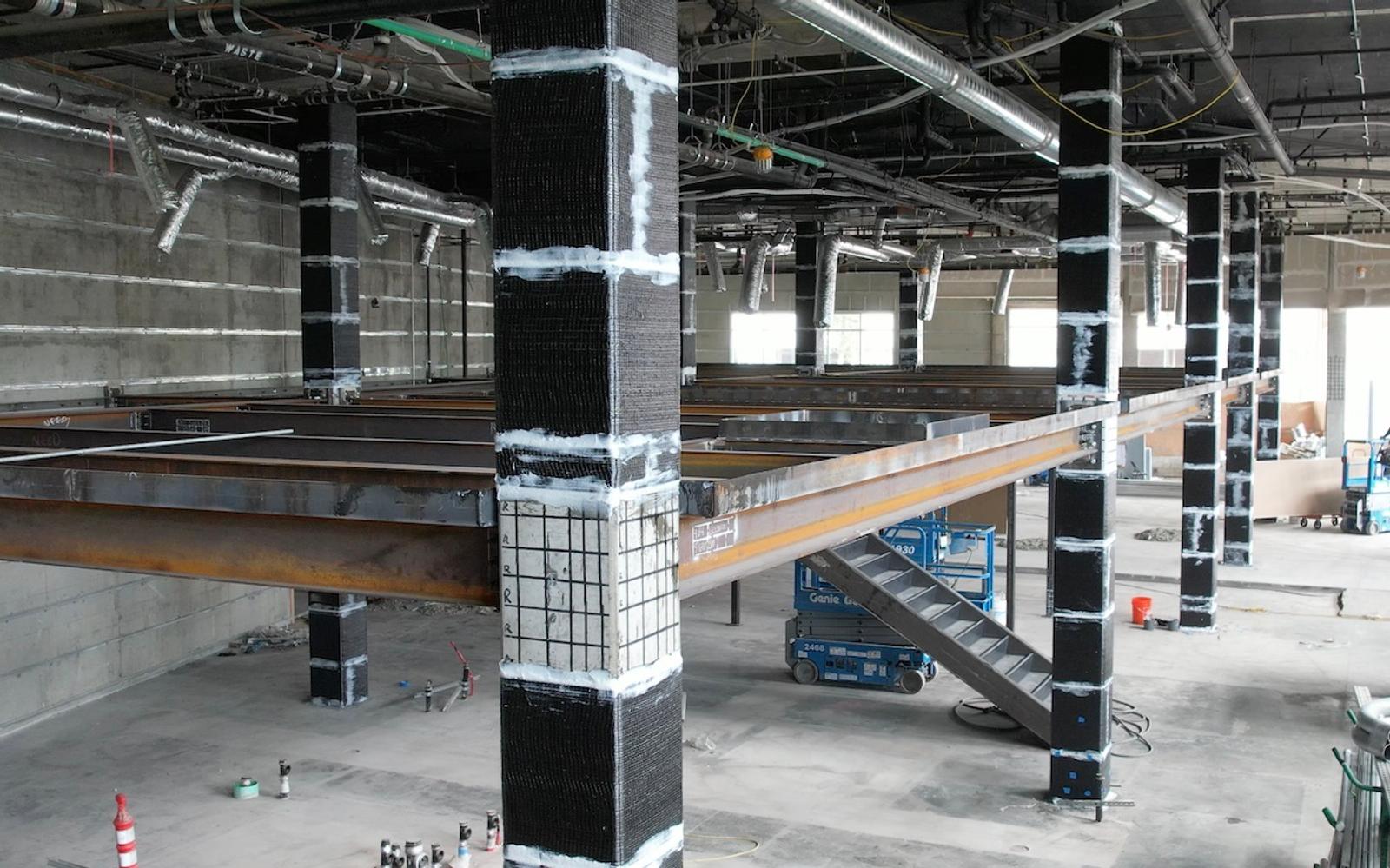
Carbon fiber reinforcement systems are used to strengthen and restore structural capacity in a variety of concrete elements, including columns, walls, and areas affected by spalling or deterioration. Their lightweight, high-strength properties make them well suited for retrofitting existing structures. Because carbon fiber materials can conform to complex shapes, they can be effectively applied to curved surfaces, irregular shapes, and corner details where traditional reinforcement methods may be difficult to install.

Why Groundworks?
When post design reinforcement is required, choosing an experienced partner is essential to ensuring long-term structural performance. Groundworks combines detailed site evaluations, engineer-backed solutions, and industry-proven technologies such as foundation underpinning and polyurethane injection to deliver reinforcement strategies tailored to each structure’s specific needs. Contact Groundworks today to schedule an evaluation and learn how our team can help strengthen your building for today’s demands and tomorrow’s growth.