

 AI-Powered
 Soil Erosion Solutions for Tilt Up Buildings
Tilt-up Buildings: Durable, Yet Complex
Tilt-up buildings are known for their durability and widespread use in warehouses, distribution centers, and commercial spaces. However, when these massive wall panels experience settlement, repairs can be complex. Each panel is a critical part of the structure, and even slight movement can create cracks, misalignment, or safety concerns. Stabilizing and lifting panels requires precise planning and specialized techniques to restore structural integrity without disrupting business operations.
Unfortunately, soil erosion, settlement, and other factors can cause tilt-up buildings to shift or develop structural concerns. Recognizing the early warning signs is key to preventing costly damage. In this article, we’ll share the most common indicators of instability and how the experts at Groundworks can restore and protect your investment.
How to Recognize Tilt Up Foundation Instability
Tilt up buildings are vulnerable to issues just like any other commercial structure. Whether owner, property management, or building engineer, recognizing instability can be key in resolving problems before they become massive and costly. Watch for these signs to detect instability and prevent further structural damage.
- Cracking at Corners or Wall Joints: Gaps or cracks may indicate wall or foundation shifting. The gaps or cracks may grow or worsen with time.
- Uneven Floors or Settling Slabs: Sinking floors point to voids or soil erosion under slabs. Sinking concrete slabs in the floors of the building create trip hazards for employees and visitors alike.
- Separation at Wall Base: Gaps between the base of the walls and the slab suggest movement, which can compromise load transfer and indicate underlying soil or foundation issues.
- Visible Soil Erosion: Erosion around the building’s perimeter signals weakened soil support. Soils may be eroded and voids developing beneath the floors, where they are invisible to employees.
- Heavy Load Areas Showing Signs of Movement: Heavy loads can exacerbate foundation shifting, particularly in unsupported areas, leading to cracks, uneven floors, and increased structural stress.
Expert Foundation Repair for Tilt Up Buildings
At Groundworks, we believe that all tilt up buildings should be on solid ground. Our experts can offer commercial tilt up buildings two different kinds of foundation repair, depending on the needs of the structure: foundation underpinning and polyurethane injection.
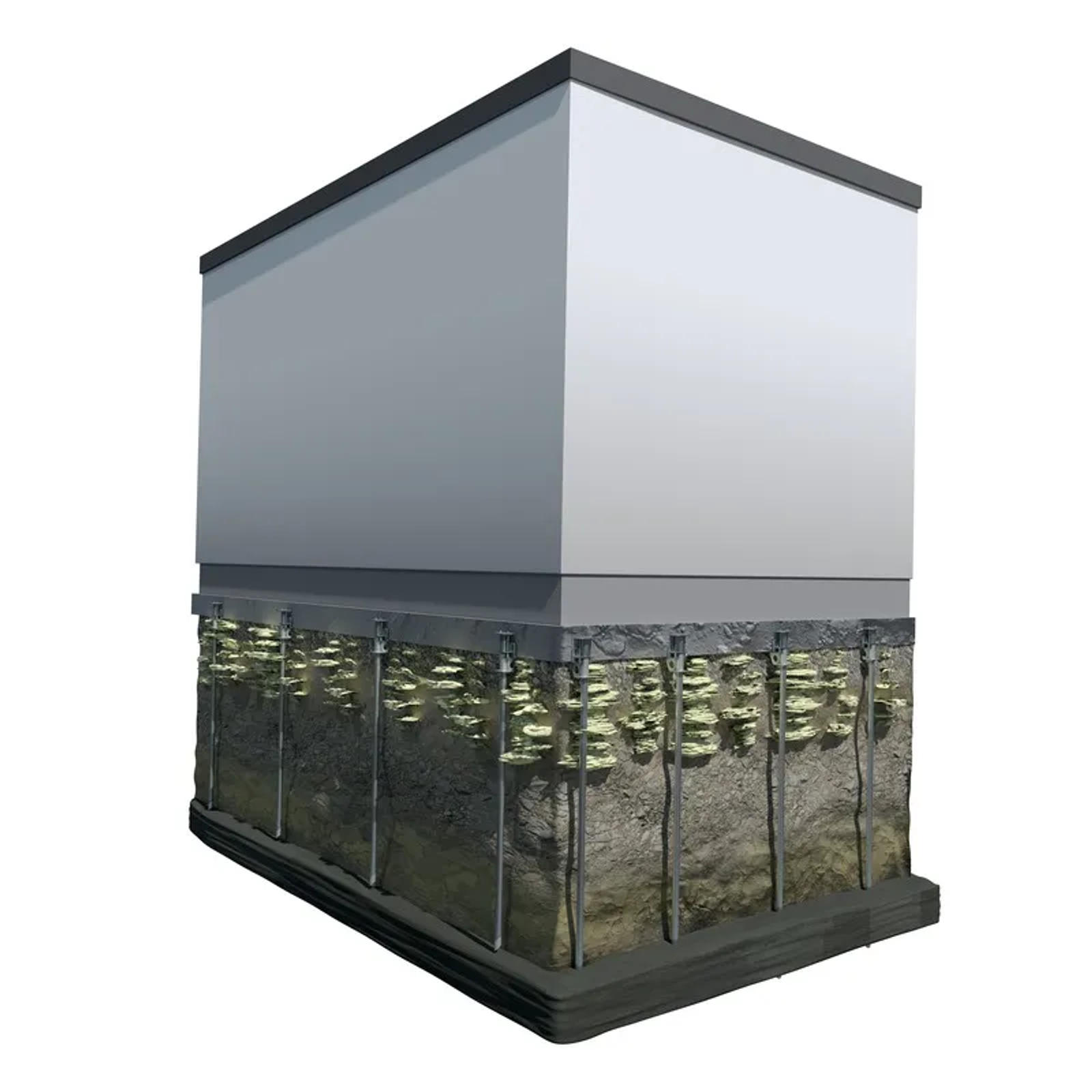
How Groundworks Resolves Foundation Settlement in Tilt-Up Buildings: Underpinning
Our underpinning service provides structural and load bearing support for these buildings.
Foundation underpinning for tilt up buildings involves strengthening and stabilizing the existing foundation to address settlement or structural concerns. This process begins with assessing load bearing walls to determine where additional support is needed, often in high-stress areas affected by soil movement or erosion. Support elements such as push piers or helical piles are strategically installed beneath the foundation. In many cases, interior support columns rest on spread footings, which can also settle over time. Underpinning these column footings provides critical stabilization to ensure the building’s vertical loads are safely transferred to competent soil. These components transfer the building’s weight away from unstable soil and down to deeper, more stable strata. By redistributing loads and locking the structure into a secure position, underpinning not only halts further movement but also helps restore the building’s structural integrity.

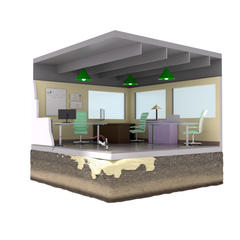
How Groundworks Resolves Interior Foundation Settlement in Tilt-Up Buildings: Polyurethane Injection
Polyurethane injection is a targeted solution for addressing voids and unstable soil beneath tilt up building slabs. The process begins by drilling small, strategically placed injection points through the slab or foundation. High density polyurethane is then injected into voids and loose soil layers, where it flows to fill gaps and permeate weak zones. As the material expands, it hardens, consolidating loose soils. It increases soil density and creates a stable, load bearing base. This expansion also exerts controlled lifting force, which can help lift and level settled slabs. By restoring soil strength and uniformity, polyurethane injection helps protect the structure from further movement and extends the service life of the building.
Why Groundworks?
Our underpinning service provides structural and load bearing support for these buildings.
At Groundworks, we believe in bringing stability back to structures, even when the ground is always shifting. We are here to protect the structures that serve our communities, industries, businesses, and institutions. Our comprehensive and non-invasive repair methods restore safety and functionality with minimal impact to daily operations to active sites, allowing essential operations to continue. And with over 50 years delivering solutions, you can trust our team to get the job done right. Contact us today.
