AI-Powered
 Hidden History Under Your Home: 250 Years of U.S. Soil Change
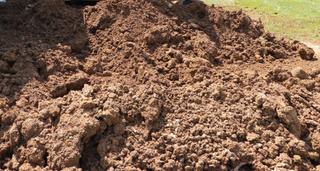
If only the ground beneath us could speak, just imagine the stories it would tell. America has changed so much in the last 250 years, and the ground we’re walking on today may or may not be the same as the ground our ancestors walked on.
Just as our country has undergone many transformations, so has the soil, whether from human activity, natural causes, or weather-related changes. Let’s dig a little deeper into the soil across the United States, how it has changed over time and why, and what this means for current and future generations, particularly their homes.
What Was U.S. Soil Like 250 Years Ago?
True to the song, America’s landscape in the 1700s featured “amber waves of grain, “purple mountain majesties,” and “fruited plains” stretching “from sea to shining sea.” Though it was covered by vast forests, plains, and other ecosystems, the country was far from a static or untouched wilderness. Indigenous people actively shaped the early American landscape through deliberate agricultural methods, strategic controlled burns, and other land-management techniques.
Soil composition varied across the emerging nation’s regions. In the Midwest, lush prairie grasses cultivated deep, rich soils by depositing organic material through extensive root networks. Eastern forests featured distinct layers of decaying leaves that shaped their underground character, and drier conditions in the West produced mineral-rich terrain where life moved at a more measured pace.
According to the U.S. Department of Agriculture Natural Resources Conservation Service (NRCS) Soil Survey Manual, these unique regional profiles emerged from long-term interactions among climate, biology, topography, and raw geological materials, shaping the landscape’s stability well before the first modern foundations were poured.
How Has Soil Changed Over 250 Years?
Soil transformation in America accelerated after European settlement expanded westward, and residents embraced modern ways of living and using the land. Several major forces reshaped soil structure, composition, and long-term stability, including:
Agriculture: Changed Soil Structure and Organic Matter
As pioneers built new lives for themselves, it came at a cost: the condition of the land. Agricultural expansion transformed large areas of the country through plowing, grazing, crop production, drainage, and repeated machinery traffic. These activities can reduce organic matter, compact soil, increase erosion, and change how water moves through the ground. The USDA’s Economic Research Service tracks long-term U.S. land-use trends through its Major Land Uses data series, while NRCS emphasizes that healthy soils with organic matter, biological activity, and reduced compaction are better able to absorb water and resist runoff and erosion.
Urban Development: Sealed and Compacted the Ground
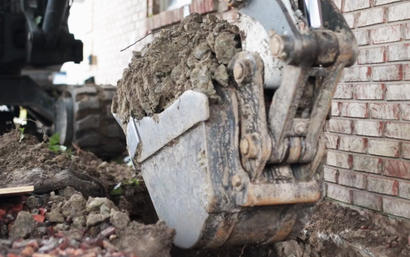
As forests, fields, and wetlands were cleared and transformed into neighborhoods, roads, driveways, and commercial areas, soils were graded, compacted, mixed, filled, and covered with impervious surfaces. USGS tracks impervious surface coverage through the National Land Cover Database, describing these surfaces as artificial materials such as pavement, concrete, rooftops, and structures that reduce infiltration and increase runoff, which can concentrate water near foundations or overwhelm drainage systems. The 2025 Land Cover map shows a majority of natural vegetation, but significant agricultural usage and concentrated urban or developed land.
Drainage and Wetland Loss: Changed Moisture Patterns
In the same vein, drainage systems, grading, ditches, storm sewers, and agricultural tile changed how water moves through many landscapes. These changes can make land easier to farm or build on, but they also alter groundwater levels, seasonal saturation, runoff, and soil wet-dry cycles. According to the U.S. Geological Survey (USGS), groundwater withdrawal and soil compaction are major contributors to land subsidence throughout the country.
Climate Change: Intensifying Wet-Dry Stress
Climate change is adding new stress to already-altered soils. The National Oceanic and Atmospheric Administration (NOAA) explains that a warmer atmosphere can hold more water vapor, increasing the potential for heavier rainfall events. At the same time, warmer conditions can lengthen periods between rainfall, contributing to drought and soil drying.
Heavy rain saturates the ground, accelerates runoff, and erodes slopes, while droughts cause certain clay soils to contract. These soils then expand when moisture returns, creating a cycle of instability. Extreme precipitation events have grown more frequent across much of the United States since the early 20th century and are expected to become even more frequent in the 21st century.
What Is U.S. Soil Like Today?
As you can see, all this human and weather-related activity has had a significant impact on America’s soil, which remains as diverse as the country itself. Because of these changes, modern soils in developed areas are often less stable and less predictable than their historical counterparts.
Here’s a closer look at regional differences in soil across the United States:
Midwest
The Midwest still contains some of the most productive agricultural soils in the country, but long-term cultivation has led to significant topsoil loss, an estimated 57.6 billion metric tons since widespread cultivation began, according to research summarized by the University of Massachusetts Amherst. Intensive farming and drainage have also altered how water moves through the soil, potentially affecting groundwater behavior, seasonal moisture levels, and soil stability near structures.
Southeast
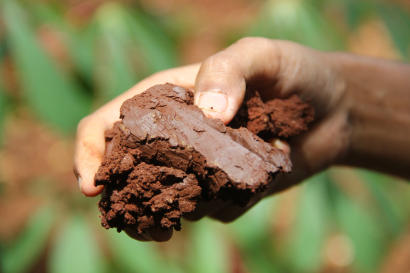
Many soils in the Southeast are clay-rich and respond strongly to changes in moisture. These soils expand when wet and shrink when dry, creating seasonal changes in volume and surface movement. NRCS identifies Vertisols as soils with high amounts of expanding clay minerals that shrink during dry periods and swell when wet. While not all Southeastern soils are Vertisols, the region’s clay-heavy landscapes make moisture management, drainage, and land-use planning important.
Texas and the Southern Plains
Texas and the Southern Plains feature expansive clay soils that shift through intense wet-dry cycles. These soils contract during droughts and swell with moisture, a phenomenon documented by the USGS swelling-clays map. Homeowners and planners can use the USDA Web Soil Survey to evaluate local shrink-swell risks. Such soil instability impacts agriculture, infrastructure, and the long-term integrity of built foundations.
Western States
While Western landscapes vary from deserts to mountains, Aridisols dominate the dry interior West and Southwest. The NRCS describes these as soils of arid environments, where restricted moisture limits plant growth and leads to the accumulation of minerals such as salts, gypsum, or clay in the subsurface. Drought, wildfire, and erosion are primary concerns; the USGS reports that post-wildfire slopes shed water rapidly, increasing the risk of flash floods and debris flows.
Coastal Areas
Coastal soil conditions depend on elevation, water tables, and vegetation. Many regions feature Entisols—young, sandy soils common to dunes and tidal areas—including wet Aquents found along the southern Atlantic and Gulf coasts. Wetlands may contain Histosols. Today, these areas face significant risks from sea-level rise, flooding, and erosion, threatening both ecosystems and infrastructure resilience.
Each area of the country faces its own mix of natural soil behavior, land-use history, and climate pressure. Understanding those local soil conditions is essential for evaluating long-term risks to landscapes, infrastructure, and homes.
What Does Soil Change Mean For Home Foundations?
The lasting support of your home’s foundation depends entirely on the soil beneath it. Ideally, the best soil for foundation stability remains consistent regardless of moisture levels, though such perfect conditions are rarely found in nature.
Changes in soil composition and strength impact your home’s ability to stand for 250 more years. Common challenges include:
- Shrink-Swell Cycle: Clay-based soils expand when wet and shrink when dry, resulting in hydrostatic pressure that causes wall cracking, movement, and water intrusion.
- Erosion and Washout: Unstable soils that erode from underneath a foundation due to water or wind leave gaps in the ground that the home can sink into, resulting in foundation settlement, uneven floors, and drywall cracks.
- Poor Soil Compaction: Inadequately prepared soils lead to differential settlement, where foundation sections sink unevenly. This is particularly frequent in fast-growing suburban developments.
These soil-related challenges, stemming from both natural processes and human development, can compromise the structural integrity of your foundation. Recognizing the common signs of this instability is the critical first step toward protecting your most important asset for future generations.
Common Signs of Foundation Damage
Unstable soil beneath your foundation can cause several problems, including these common symptoms:
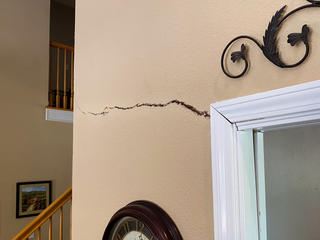
These issues can happen in old homes and modern structures alike. The key is knowing what to look for and addressing the problem promptly to prevent further damage and expensive repairs.
How to Repair a Damaged Foundation
Groundworks’ trained and certified experts understand that every home is different and requires its own unique repair plan. After a thorough, free inspection, our specialists will recommend foundation repairs tailored to meet your home’s needs.
These include foundation piers to address foundation settlement, wall repair techniques such as wall anchors to stabilize cracking and bowing basement walls, crawl space jacks to reinforce and lift sagging floors, and waterproofing solutions such as basement sump pumps or crawl space encapsulation to manage moisture issues effectively.
💡 Fun Fact:
We install our foundation pier varieties—helical, push, and slab—deep into the ground until they reach more stable, load-bearing soil, such as bedrock, providing lasting foundation protection.
What’s The Future of Soil and Foundations in the United States?
Over the last 250 years, American soil has changed from largely undisturbed natural systems to heavily managed, frequently disturbed ground shaped by agriculture, development, industry, and climate pressures. These changes have reduced soil stability in many regions and altered how land behaves beneath homes and other buildings.
What once served as a relatively balanced ecological foundation has become a dynamic, sometimes unstable engineered landscape. As a result, understanding soil is no longer just an agricultural or environmental concern; it’s an important part of protecting homes, infrastructure, and long-term property value.
The future of resilient housing in America will depend heavily on how well builders, engineers, planners, and homeowners understand the ground beneath them.
Contact Groundworks For Reliable Foundation Repair

Soil conditions have changed dramatically across the United States, but one thing has not changed: a home is only as stable as the ground beneath it. Whether your foundation concerns are related to expansive clay, poor drainage, erosion, settlement, or shifting moisture conditions, Groundworks identifies the source of the problem and recommends reliable repair solutions.
If you’ve noticed cracks, uneven floors, sticking doors, bowing walls, or other signs of foundation movement, don’t wait for the damage to get worse. Contact Groundworks today to schedule a free foundation inspection and take the first step toward protecting your home.
Soil and Foundation FAQs
The shrink-swell behavior of clay soil can cause foundation movement, leading to cracks in walls, uneven floors, and other structural issues.
Water retention refers to how well soil holds moisture. It’s important because different levels of retention affect how the soil expands and contracts, and how it supports foundations.
The soil composition around your home plays a crucial role in foundation stability during extreme weather. For instance, clay soils are prone to expansion when wet and contraction when dry, which can cause significant foundation movement and increase the risk of damage.
Related Resources