AI-Powered
 How To Create a Comfortable Home Humidity Scale
When it comes to your home, checking your air quality is essential. Relative humidity (RH) levels can play a major role in your health. While humidity is the amount of water content (moisture or vapor) in the air, relative humidity is when moisture in the air is relative to the temperature. RH is expressed as a percentage of the total amount of moisture the air can hold.
At 100 percent relative humidity, the air volume is saturated with moisture, meaning the moisture in the air has reached capacity, and the vapor will condense into liquid. The environment is uncomfortably humid.
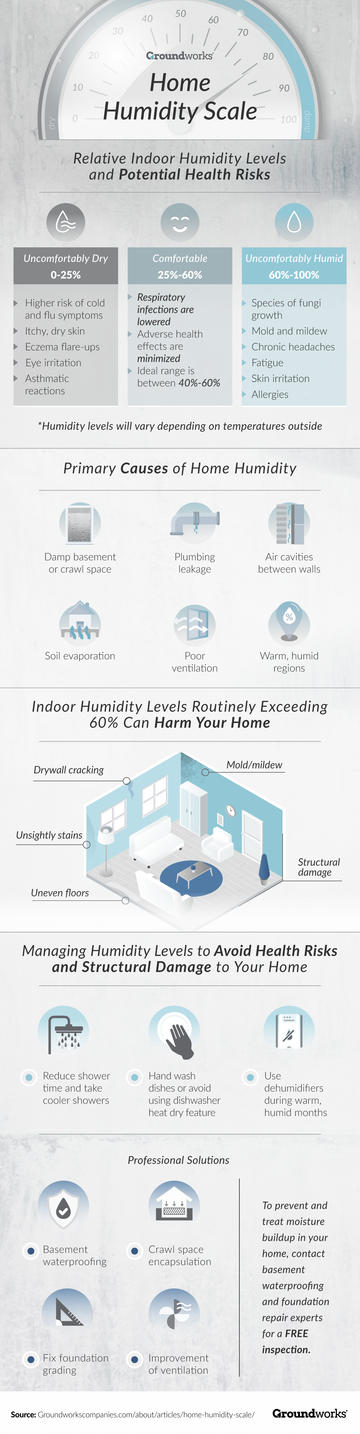
There are three categories that indoor relative humidity can fall under:
- Uncomfortably dry, 0 to 25 percent
- Comfortable, 25 to 60 percent
- Uncomfortably humid, 60 to 100 percent
In keeping skin and respiratory irritations at bay, you will be most comfortable between 40 and 60 percent relative humidity.
How Do High and Low Relative Humidity Levels Affect Your Health?
As relative humidity levels spike to 60 percent and higher, homeowners could be at risk of developing adverse health effects that include:
- Fatigue
- Skin irritation
- Allergies
- Headaches
If you’re living in an uncomfortably humid environment for a prolonged amount of time, other symptoms, such as chronic headaches and fatigue, can occur.
Using a hygrometer will provide a reading of the moisture content in the air. Some other telltale signs that the indoor air in your home has a high relative humidity level include:
- Mildewy odors
- Stained walls
- Spots on surfaces
- Condensation on surfaces
These are all indicators pointing to mold growth. It’s worth emphasizing that it can change the relative humidity as the outdoor air enters your home. The outdoor air can enter your home through the roof, basements, the crawl space, windows, and attics.
Low relative humidity is equally as harmful as high relative humidity. A low indoor RH may increase respiratory tract infection risk and dry out the nasal passage, thus weakening your sense of smell. You’re also more susceptible to the flu.
In the winter, cold air holds less moisture; therefore, it is easier to saturate cold air. When cold air enters a commonly warm, toasty home during wintertime, the air has a low RH. The combination of dry air and cold air creates a trigger for the flu.
Basically, winter packs a punch for low humidity levels since heating your home can turn the air into something comparable to the high desert.
Because hydration in your skin dips in low humidity, you are prone to itchy, dry skin conditions like eczema or other skin irritation. Other not-too-pleasant side effects include a reduced sensitivity to taste and asthmatic reactions. The perfect storm for irritable skin and respiratory reactions occurs in a dry, low-humidity environment.
How To Strike a Balance and Create a Comfortable Relative Humidity
The best cure for high humidity is reducing indoor moisture and retrofitting your home to prevent moisture from entering. Consulting professionals specializing in controlling home humidity levels is an ideal place to start.
There are a few things you can do at home to minimize how much moisture you create:
- Taking shorter showers has some effect.
- Using ventilation throughout the house, especially the bathroom and kitchen, will significantly help.
- If you see an area with condensation, safely clean it up.
- Using dehumidifiers will also help.
Ideally, you want to consult professionals who work in basement waterproofing and crawl space encapsulation. This is one of the most effective ways to control moisture in your home because it’s where the vast majority of your moisture is entering.
While sometimes mold growth can be safely removed by thoroughly washing the area, it’s best to consult with a mold remediation specialist. To eliminate all traces of mold, get the help of a professional to locate the source and begin the remediation process.
If you live in a dry and warm region, you can naturally increase the humidity in your home by doing the following:
- Invest in multiple humidifiers; humidifiers are especially useful in the winter when the air is dry.
- Trade out your iron for a steamer.
- Decorate your home with houseplants; not only are houseplants aesthetically pleasing, but they also add moisture to the air through transpiration.
Understanding Basement Humidity
Basement humidity can be trickier than the rest of your home. Unlike your living areas, basements are surrounded by soil, prone to temperature swings, and more likely to collect moisture. That means humidity can spike quickly—and quietly—leading to musty odors, mold growth, and structural issues.
Surprising but true: your basement’s humidity level should actually match or be lower than the rest of your home’s humidity. The ideal indoor range is 30–60%, and basements that creep above that often signal a bigger moisture issue.
How to Measure Basement Humidity
The most accurate way to monitor basement humidity is with a hygrometer or thermohygrometer—both are affordable and easy to use. Watch for visual signs too:
- Water droplets on windows or walls
- Damp smells or visible mold
- Condensation on pipes or floors
Fix the Source First
Before tackling the symptoms, you need to address the cause. Leaks, seepage, poor ventilation, and water intrusion from outside all contribute to high humidity. In many cases, this means calling a professional for a full inspection.
DIY vs. Professional Solutions
If the issue is minor, try:
- Adding a fan or improving ventilation
- Using moisture absorbers in problem areas
For long-term protection, professional solutions may be necessary:
- Interior waterproofing
- Running a high-quality basement dehumidifier
- Basement vapor barriers
- Sump pump installation
The key is prevention. Staying ahead of humidity in the basement helps protect your foundation, your air quality, and your peace of mind.
Everything you would do to reduce the humidity in your home would be the opposite if you want to increase it. You’ll breathe easier with humidifiers adding moisture to your home. Taking warm or hot, steamy showers is a bonus.
If you notice any signs of a home humidity level outside the comfort range, contact our professionals for a comprehensive consultation. You can request a home inspection and a list of the services we provide. Our professionals are fast, efficient, and provide exceptional service.
Related Resources