

 AI-Powered
 Concrete Floor Leveling: Options, Steps, and Pro Tips
Basements serve all sorts of purposes in our lives, from a sports cave or home office, to a lounge area or playroom. No matter what, having a stable concrete floor in your basement keeps the space functional and safe.
While only 24 percent of homes across the nation actually have basements, an uneven floor creates safety issues in 100 percent of those homes. Plus, an uneven concrete floor also causes structural problems that can spread to other areas of your house.
So, what are your options when it comes to leveling a concrete floor? And is the project possible for DIY weekend warriors?
At Groundworks, we understand the actual causes behind unlevel concrete floors and we’ve repaired thousands across the nation. In this article, you’ll learn the best strategies for leveling a concrete floor, the steps involved in the process, and professional tips on how to make sure the job is done right.
Why is Concrete Floor Leveling Important?
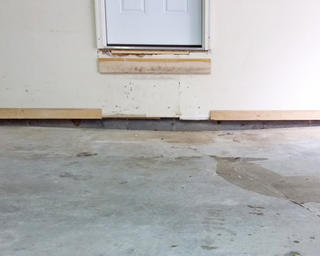
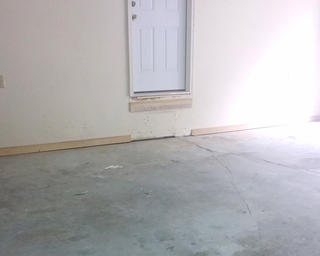
Leveling a concrete floor involves filling voids in the ground below the floor itself. While there are several reasons your concrete floor may need to be lifted, the most common reason stems from water mixing with the soil beneath your home.
Either the ground beneath your home was too loosely packed after construction or the soil type in your region is highly susceptible to soil washout or soil expansion.
What Causes an Uneven Concrete Floor?
An uneven concrete floor is often caused by underlying soil issues, such as poor compaction or erosion. When the soil beneath the concrete slab is not adequately compacted during installation, it can settle unevenly over time, leading to depressions and shifts in the concrete surface. Similarly, soil erosion due to water flow or drainage problems can wash away the supporting soil, creating voids and causing the concrete to sink or tilt.
Another common cause of an uneven concrete floor is prolonged exposure to moisture. Excess water from plumbing leaks, poor drainage, or high groundwater levels can weaken the soil and contribute to soil expansion and contraction. This instability can cause the concrete slab to shift, crack, or settle unevenly. Additionally, factors such as temperature fluctuations and freeze-thaw cycles can exacerbate these problems by causing the concrete to expand and contract.
Signs Your Concrete Needs Leveling
An uneven concrete surface can present itself in a variety of ways. Here are some common concrete warning signs to look out for:
- Sidewalk cracks
- Porch or patio cracks
- Garage floor cracks
Do Cracks in Concrete Indicate Sinking?
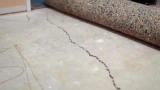
Cracks in concrete can be an indication of sinking, but they are not always definitive proof. Sinking, or settling, occurs when the soil beneath the concrete slab shifts, compresses, or erodes, leading to an uneven support base. As the concrete loses its even support, it can crack under the stress of its own weight and any additional loads it bears. Cracks due to sinking are typically accompanied by visible unevenness or a noticeable drop in the slab’s level.
However, not all cracks are caused by sinking. Concrete is a rigid material that can crack due to several other factors. Changes in temperature can cause the concrete to expand and contract, leading to stress that manifests as cracks. Similarly, as concrete cures and dries, it can shrink slightly, potentially resulting in cracks if the process is uneven or too rapid. Overloading the concrete slab with heavy objects can also cause cracks if the weight exceeds the slab’s designed capacity.
Methods for Leveling a Concrete Floor
Typically, when it comes to concrete lifting and leveling there are four main types of repair offered by professionals:
Concrete Replacement
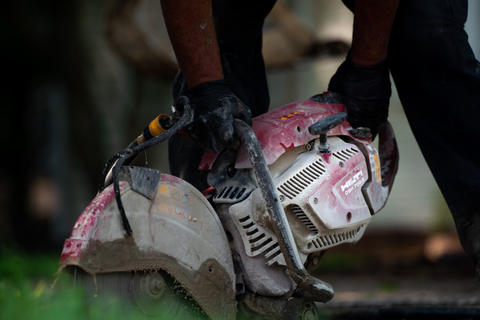
Concrete replacement involves removing the damaged slab entirely and pouring a new, leveled surface. First, the existing concrete is broken up and removed. Any necessary soil stabilization or drainage improvements are made to prevent future sinking. Finally, fresh concrete is poured and finished, creating a new, level surface. This is typically the most costly concrete leveling method.
Mudjacking
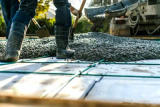
Mudjacking fixes a sunken concrete floor by injecting a slurry mixture of cement, sand, and water beneath the sunken slab through small drilled holes. This slurry fills the voids and exerts pressure to lift the concrete back to its original level. Once the slab is raised and properly aligned, the holes are patched, resulting in a leveled and stable surface without the need for complete replacement.
Self-Leveling Concrete
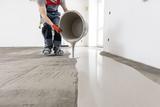
Self-leveling concrete is a specially formulated mixture that spreads out evenly and settles into the existing dips and voids. This material, which flows and levels itself without the need for extensive troweling, hardens quickly to create a flat, even floor. While it doesn’t address underlying soil issues, it offers an effective and quick solution for minor unevenness and small-scale sinking.

Polyurethane Foam Injection
Polyurethane injections fix a sunken concrete floor by injecting a dense foam beneath the sunken slab through small drilled holes. The foam expands rapidly, filling voids and lifting the concrete back to its original level. This lightweight, water-resistant foam provides a stable and durable solution, quickly curing to support the slab and prevent future sinking. The process is minimally invasive and allows for immediate use of the repaired concrete surface.
What’s the Best Way to Level a Sunken Concrete Floor?
Here’s the truth – only one of these solutions actually solves the underlying problems behind concrete damage. It’s polyurethane injection, and Groundworks uses it for every concrete lifting job.
The other solutions are often messy, expensive, and disruptive to your home life. Even worse, none of them actually fix the underlying problems that caused your damaged concrete floor in the first place.
While concrete replacement, mudjacking, and self-leveling concrete may give your concrete floor a temporary facelift, they will eventually fail. You’ll be left with cracked, sinking, uneven concrete all over again. Polyurethane injection actively prevents this cycle.
Why Polyurethane Injection is Best
Polyurethane injection has become a popular solution for leveling concrete due to several key factors:
1. Lightweight
One of the biggest advantages of polyurethane foam is its lightweight nature. Installing this below your concrete floor won’t add additional weight or stress to the concrete structure.
2. Minimal Disruption
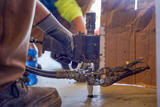
Additionally, polyurethane injection is a quick and minimally disruptive process. Completing a project with polyurethane generally takes only a few hours and leaves little to no mess behind.
3. Controlled Installation
Installing polyurethane foam also allows for precise leveling control. Professionals can accurately control the amount of material injected and the pressure at which it’s injected, making it easier to achieve an even surface.
4. Resistant to Moisture
The foam is water-resistant, which makes it ideal for outdoor applications or areas that are prone to moisture (like basements). It is long-lasting and maintains its shape and strength over time, providing a stable, level surface for years to come.
5. Cost-Effective
Lastly, polyurethane injection is a cost-effective method that provides long-lasting results while avoiding the need for extensive and expensive repairs unlike concrete replacement or mudjacking. It saves you money in the long run.
Polyurethane Installation Steps
Groundworks uses a patented version of polyurethane called PolyRenewal™. This solution is easy to install and it generally takes about a day to complete an entire concrete lifting project.
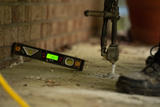
- Step 1: Penny-size holes are drilled into the sinking concrete and injection ports are inserted.
- Step 2: The two-part liquid polymer is mixed at the nozzle and injected into the holes. The polymer expands and fills the void beneath the slab. Once the void is full, the slab is lifted to a more level position.
- Step 3: The injection ports are removed and the holes are sealed and smoothed.
One of the biggest benefits that comes with PolyRenewal™ is that it cures just 15 minutes after injection. That means your concrete floor is supported on the same day as installation. You can get back to your daily routine without much interruption.
Concrete Lifting vs. Concrete Leveling
You may have seen professionals use the term concrete lifting in place of concrete leveling. Keep in mind, these terms refer to the same process of filling gaps between the concrete slabs and the underlying soil.
However, concrete leveling is actually a misleading term, so many companies, including Groundworks, use concrete lifting to more accurately describe the process. Concrete is generally not “level” in most cases. There tends to be some sort of angle or slope to the concrete to prevent water collection.
This is true for many concrete floors located inside and outside. Using “concrete leveling” makes it sound like the floor will become completely straightened out, but that isn’t what happens.
That’s why concrete lifting is the more accurate term. Professionals lift a concrete floor back to a safe position. Remember this while you consider hiring professional help.
Groundworks Helps With Sunken Concrete Floors

The importance of a level concrete floor cannot be underestimated. Without a strong, even floor, injury becomes a real possibility, and flooring or other basement projects will be difficult to complete. If you’re looking to put the problem behind you, consider working with Groundworks.
With local offices in 33 states, we’ve helped thousands of homeowners nationwide repair and prevent concrete issues. The first step in repairing concrete issues is scheduling a free inspection today!
FAQs
The costs of concrete lifting vary based on project-specific details like the size of the concrete area and the severity of the damage. PolyRenewal™ injections are cost-effective compared to complete slab replacement or DIY installations. Contact a local professional for a free concrete inspection and estimate.
Common problem signs indicating that your concrete may need to be lifted and repaired include cracks, heaving or sinking areas, or visible gaps between slabs. Unevenness can cause safety concerns, such as tripping hazards, and can also negatively impact the aesthetics of your property.
Concrete lifting works for a wide range of concrete structures, from small residential projects to large commercial or industrial applications. However, if the concrete is severely damaged, it may need to be replaced entirely.
Disclaimer: “Concrete leveling” means the process by which cracked, uneven concrete is stabilized, and in many cases lifted, by means of PolyRenewal™ polyurethane foam. Groundworks does not guarantee that PolyRenewal™ can make your concrete perfectly level.