

 AI-Powered
 What Is Concrete Made Of? Ingredients and Composition Explained
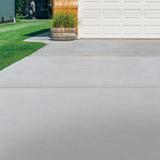
Take a look at your property. Odds are, you see concrete somewhere—your driveway, sidewalks, and even your foundation. This widely used material is popular because of its strength, but it’s not immune to problems.
In another article, we answered the question, “Why Does Concrete Crack?”
In this article, we delve deeper to give you an inside look at concrete surfaces by examining what concrete is made of. Let’s jump right in!
What’s In Concrete?
Concrete’s basic components and ratios include:
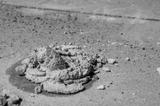
- Cement (Approx. 10 to 15%): The binding agent, created by blending ground clinker and gypsum. Clinker, an intermediate product, is a solid created during the production of Portland cement. Portland cement, made from a mix of limestone and shale or clay, was invented by Joseph Aspdin in 1824.
- Water (Approx. 15 to 20%): Combined with cement to form a paste.
- Aggregates (Approx. 65 to 75%): Comprise the bulk of concrete, consisting of sand, gravel, or crushed stone. These materials are crucial for providing strength to concrete, and they are categorized into coarse and fine types.
- Air: Present either as intentionally added bubbles (entrained) or unintentionally incorporated during mixing (entrapped).
- Admixtures: Optional ingredients added in small quantities to modify concrete properties.
💡 Fun Fact:
Many people use “concrete” and “cement” interchangeably. Cement is an important ingredient that forms into a solid concrete surface.
How Is Concrete Made?
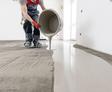
Now that you know what materials make up concrete, let’s take a look at how concrete slabs are made. Important factors include:
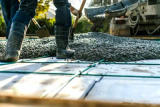
- Ingredient Measuring and Mixing: Achieving a robust, workable concrete surface requires precise measurement and a thorough combination of water, Portland cement, and aggregates.
- Chemical Reaction and Strengthening: The exothermic process of hydration begins instantly when water meets cement. Curing follows, involving moisture retention to enhance concrete’s strength and longevity.
- Structural Enhancement: Concrete’s tensile strength is typically improved by incorporating reinforcement, often steel rebar. This technique finds widespread use in modern structural applications.
Additional Considerations
- Aesthetic and Purpose-Built Concrete: Various methods create decorative surfaces, like stamping and polishing. Unique formulations, such as sulfur-based and water-permeable concrete, cater to specific needs.
- Cutting-Edge Concrete Developments: Recent advancements have produced high-performance mixes, incorporated nanotechnology and carbon fibers, and even yielded self-repairing concrete formulations.
💡 Fun Fact:
Concrete is a porous material. If there’s too much water present, either from the cement mixture or from the underlying soil, damage can easily result from leaks and freeze-thaw cycles.
How Do I Treat My Concrete in Winter?
When surface water freezes, it expands inside concrete’s pores, gradually breaking them apart. Each freeze-thaw cycle worsens the damage until pitting and flaking become visible.
While salt helps prevent slips in winter, it also corrodes concrete, leading to cracks and pitting. Melting snow and ice can wash away soil beneath slabs, causing them to sink or tilt, creating hazards and eyesores.
Strategies to safeguard concrete against winter and salt-related deterioration include:
What To Know Next
Concrete is a complex material that requires skill, experience, and attention to detail to create properly. It’s best to trust the pros with its installation and repair.
There’s a lot more to know about concrete, including repair methods like lifting and leveling with polyurethane injections. You can learn more by checking out our Ultimate Guide to Concrete Lifting.
If you need concrete repair, you can benefit from a thorough, free inspection from Groundworks. Our team will evaluate your home’s concrete and recommend solutions tailored to meet your unique needs. Click the button below to get started!

Groundworks
Related Resources
- 5/
- 5/
- 5/
- 5/
- 5/

Jeremy Brown did a great job walking me through the inspection and explaining what everything meant.
Jeremy Brown did a great job walking me through the inspection and explaining what everything meant.
- 4/
- 4/
- 4/
- 4/
- 4/
Josh and his helper put the foam under our garage and sunroom floor to keep it from settling any more. Josh was very good at explaining…
Josh and his helper put the foam under our garage and sunroom floor to keep it from settling any more. Josh was very good at explaining what they were going to do and answering questions. I feel like they did a good job. I guess we will know more in a year when Dakota comes back to see how things look. John Luthi
- 5/
- 5/
- 5/
- 5/
- 5/
Company was very professional. Especially Brandon Griffith, he literally kept me in the loop about every step of the process. Above and…
Company was very professional. Especially Brandon Griffith, he literally kept me in the loop about every step of the process. Above and beyond just a job for him. He cares about you as a person more than just another customer.
- 5/
- 5/
- 5/
- 5/
- 5/
It has been a year since Ohio Basement Authority waterproofed my basement. I want to thank Jabar, Chris & Aman for doing such a fine job! …
It has been a year since Ohio Basement Authority waterproofed my basement. I want to thank Jabar, Chris & Aman for doing such a fine job! I would definitely recommend Ohio Basement in Columbus Oh…
- 5/
- 5/
- 5/
- 5/
- 5/
Damon Wolfe came today to inspect my front steps and basement. He communicated with me prior to the appointment several times so I knew…
Damon Wolfe came today to inspect my front steps and basement. He communicated with me prior to the appointment several times so I knew exactly what to expect. He was very professional, knowledgeable and friendly. I feel like he knew exactly what the problem was and how to fix it. He is a true expert in his field. Thank you Ohio Basement Authority for having Damon on your team.
Disclaimer: “Concrete leveling” means the process by which cracked, uneven concrete is stabilized, and in many cases lifted, by means of PolyRenewal™ polyurethane foam. Groundworks does not guarantee that PolyRenewal™ can make your concrete perfectly level.