AI-Powered
 Which States Have the Highest Interest in Foundation Repair? 2025-2026 Search Data & Rankings
This page examines 12 months of Google Trends data to identify where U.S. homeowners most actively searched for “foundation repair.” We highlight the regions with the highest demand and concern.
- Understanding the Data
- National Foundation Repair Search Patterns
- Why Kansas and Texas Lead the Nation in Foundation Repair Interest
- Regional Analysis of Foundation Repair Interest
- What This Data Means for Homeowners in 2026
- How to Protect Your Home From Foundation Damage
- Next Steps: Professional Inspection
Understanding the Data
To interpret these rankings correctly, it is important to note that Google Trends data measures relative search interest by location and time period, not absolute search volume. Higher rankings may indicate areas at an elevated risk or increased awareness of foundation issues. A value of 100 represents peak popularity for the term within the selected time frame and location.
This data accounts for population size and total search activity. It helps identify geographic patterns affecting foundations, informs risk-aware housing decisions, and guides those interested in learning more about how environmental and regional factors shape homeowner concern.
National Foundation Repair Search Patterns
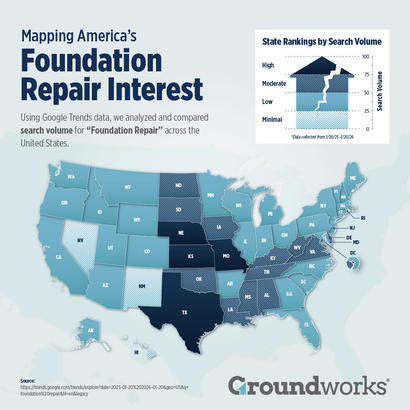
Across the United States, foundation repair-related search interest is unevenly distributed, with certain states ranking higher than others. According to Google Trends data, Kansas ranks first and Texas second nationwide in foundation repair searches over the 12-month period spanning January 20, 2025, to January 20, 2026.
Why Kansas and Texas Lead the Nation in Foundation Repair Interest
Although Kansas and Texas differ geographically, both share environmental and construction characteristics known to increase foundation movement and structural stress.
Geological and Climatic Factors in Kansas and Texas
Expansive Clay Soil
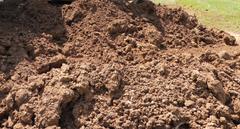
Expansive clay soils are a major contributor to foundation instability in both Kansas and Texas. Texas is widely known for Houston Black clay soil (often called “Black Gumbo”), while clay-rich, montmorillonite-dominant soils are more common in Kansas.
These soils expand when wet and contract when dry. This shrink-swell soil cycle places stress on foundations from below, often leading to cracking, settlement, and structural movement.
Slab-on-Grade Construction
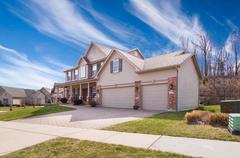
Construction methods further increase vulnerability. According to the National Association of Home Builders, over 97% of new single-family homes in Texas are built on slab-on-grade foundations.
While cost-efficient and well-suited for warm climates, slab foundations rest directly on surface soils. This foundation positioning increases settlement susceptibility compared to deeper foundation systems, such as basements that lie below the active soil zone.

Extreme Weather Patterns
From 2024 through early 2025, weather conditions shifted dramatically. NOAA’s National Centers for Environmental Information (NCEI) reported 27 separate weather and climate disasters in 2024, each exceeding $1 billion in losses, with total damages reaching approximately $182.7 billion.
Shrink-swell soil conditions caused significant damage, with drought affecting many areas across the Midwest and Deep South. These cycles may contribute to increased homeowner concern and research into foundation damage, repair, or stability.
Landscaping and Tree-Related Moisture Loss
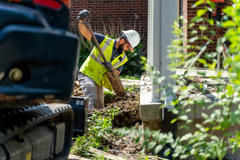
Large trees and dense landscaping intensify foundation stress by extracting moisture from the surrounding soils. Localized drying causes clay shrinkage, leading to differential settlement beneath foundations, particularly during prolonged dry periods common to both Texas and Kansas.
Other U.S. States With Elevated Foundation Repair Interest
While Kansas and Texas lead in direct foundation repair searches, several other U.S. states reveal notable interest, including Nebraska, Washington, D.C., and Missouri.
Regional Analysis of Foundation Repair Interest
The following high-level regional summary provides additional context for how foundation repair interest varies across the United States.
Midwest
The Midwest shows the highest overall relative search interest for foundation repair. Kansas ranks first nationwide. Nebraska and Missouri also appear among the top-ranked subregions in the dataset. Federal soil surveys indicate that high-shrink-swell soils are widespread across the central United States, aligning closely with observed search interest patterns.
“Water is the primary driver of most foundation problems—whether there’s too much or too little,” said Jeffrey Martin, Chief Operating Officer at Groundworks. “Extended drought can be especially damaging in areas with expansive clay soils. As these soils dry and contract, they pull away from the foundation, reducing support and causing homes to settle—often leading to cracking, sticking doors and windows, and, over time, more serious structural issues.”
South
Texas ranks second nationwide and has the highest concentration of foundation repair search activity in the United States. Expansive soils, slab-on-grade construction, and climate variability all contribute to this pattern.
Mid-Atlantic
Washington, D.C., ranks fourth nationwide. This reflects concentrated interest within a dense urban subregion rather than widespread regional activity.
Northeast
The dataset does not show any Northeastern states within the top-ranked subregions.
West
Western states do not rank among the top subregions. Search interest for foundation repair across Western states is lower than in the Midwest and Texas. This aligns with USGS soil data, which indicates that the region is largely composed of stable bedrock, sand, gravel, and caliche (a hardened calcium-carbonate layer). Unlike the expansive clays of the Central U.S., these soils provide drainage and load-bearing support, reducing the risk of foundation movement.
What This Data Means for Homeowners in 2026

The 2025–2026 data shows elevated homeowner research activity related to foundation concerns across the U.S. For homeowners in top-ranking states like Kansas and Texas, this surge in search interest likely signals active environmental stress on local properties.
Since foundation problems typically develop gradually, this elevated awareness highlights the importance of early detection before minor damage results in costly structural damage.
How to Protect Your Home From Foundation Damage
Protecting your home starts with early detection. Addressing foundation problems at their first sign can significantly reduce long-term repair costs, help protect structural integrity, and potentially preserve resale value. Homeowners can take the following measures to help prevent damage:
- Schedule regular foundation inspections to identify early signs of settlement, cracking, or movement
- Monitor changes in cracks
- Manage moisture through proper drainage, grading, and gutter maintenance to limit soil erosion
- Work with local foundation repair professionals who understand local soil and climate conditions
“Search interest is rising as drought conditions expand across the country, but awareness alone isn’t protection,” Martin added. “Seasonal inspections, proper drainage, and basic moisture control are among the most effective steps homeowners can take to reduce long-term foundation risk before repairs become costly and disruptive.”
Next Steps: Professional Inspection

If you’ve noticed cracks, uneven floors, signs of settlement, or simply want peace of mind, a professional foundation inspection provides a thorough assessment. Regional specialists understand how local soils, climate patterns, and construction methods affect foundations in your area.
Professional foundation inspections can identify potential risks and determine appropriate next steps for homeowners nationwide.
Data Scope: This analysis reflects relative Google Trends search interest by subregion based on a one-time snapshot. Search interest is normalized and does not represent absolute search volume, population-adjusted demand, or confirmed structural conditions.
Foundation Repair FAQs
Yes, foundation repair restores the stability and integrity of your building, preventing further damage. Solutions like helical piles and polyurethane injection provide long-lasting support for your foundation.
Extreme heat can dry out the soil around your home, especially in drought-prone areas. As the soil shrinks, it can no longer adequately support your foundation, leading to cracks, uneven floors, and settlement.
Absolutely. Homes built on slab foundations can develop voids due to soil movement or erosion. Depending on the severity, polyurethane injection may work, but slab piers might be needed to provide deep structural support. Only a professional inspection can determine the best approach.