AI-Powered
 4 Common Colorado Foundations
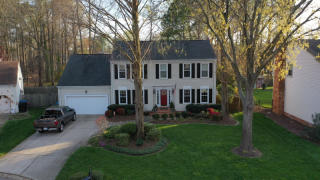
Every home is built on a foundation; however, not all foundations are alike.
The foundation type a home is built on depends on regional climate and soil conditions. In Colorado, cool, dry temperatures and varied soils—including sandy, loamy, clay, and rocky—affect the foundations used in homebuilding.
This page outlines the four common Colorado foundations and who to contact when you suspect damage.
Four Types of Colorado Foundations in Residential Homes
According to the National Association of Home Builders‘ (NAHB) analysis of the U.S. Census Bureau’s Survey of Construction (SOC), the Mountain Division’s percentage of new single-family homes built on slab foundations has increased. In contrast, the share of homes with basements has declined. Various factors, including soil conditions, frost lines, climate, and building codes, influence this trend.
Single-family homes in Colorado typically have one of the following foundation types:
1. Basement Foundation
Basements are the deepest foundation type, built as hollow structures beneath homes. Basement construction involves excavating 7-8 feet deep, with soil backfilled around the walls after construction. The foundation is extended below the frost line, which secures the structure to the ground.
Basement foundation variations include:
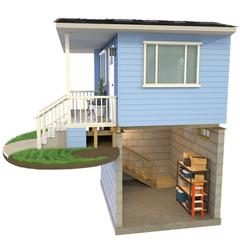
- Daylight or Walkout Basements: Referred to as daylight or walkout basements, these feature full-size windows or exterior doors, allowing natural light and direct outdoor access. Walkout basements are the best choice for homes on sloped or hilly lots, creating a brighter and more inviting space. Proper below-grade waterproofing in Colorado is essential for protecting these spaces from water damage and ensuring long-term structural stability.
- Fully Subterranean Basements: These basements are entirely below ground and accessible only from the main floor of the house. They are ideal for level lot properties.
2. Concrete Slab Foundation
Concrete slab foundations, also known as “slab-on-grade” foundations, are cost-effective Colorado foundation types.
The construction process typically involves:

- Site Preparation: Leveling the ground and preparing the site
- Footings: Pouring concrete footings below the frost line to support the slab
- Utility Installation: Installing plumbing and electrical systems within the slab.
- Rebar Placement: Steel reinforcement bars are placed within the slab for added strength.
- Concrete Pour: Pouring a thick layer of concrete to form the slab
While slab foundations are practical for many Colorado homes, they are unsuitable for all conditions. Terrain slope, soil type, and high water tables can impact their effectiveness. Waterproofing experts install below-grade waterproofing in Colorado to help address challenges like high water tables and soil movement.
3. Crawl Space
Crawl space foundations elevate a home above the ground, creating an accessible area beneath the structure—hence the name “crawl space.” This area is one to three feet high and often stores HVAC systems, electrical wiring, and plumbing.
Crawl space foundation construction involves:
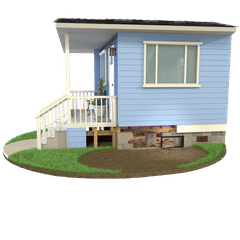
- Excavation: Digging trenches below the frost line to accommodate the footings
- Footing Construction: Pouring concrete footings into the trenches to provide a solid base
- Wall Construction: Building the walls using concrete blocks or poured concrete
- Floor Joist Installation: Placing wooden beams across the crawl space to support the floor above
While crawl space foundations are reasonably priced and provide some storage space, they are particularly vulnerable to water damage and moisture intrusion. In Colorado, many older homes with crawl space foundations face issues after rain or snow. Regular maintenance and crawl space encapsulation methods help prevent water and structural damage.
4. Pier and Beam
Pier and beam foundations in Colorado may appear similar to crawl spaces; however, their design differs slightly. Concrete beams and rebar comprise this Colorado foundation type.
Construction for pier and beam foundations in Colorado involves:
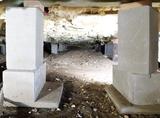
- Site Preparation: Clear debris, level the ground, and dig holes for pier installation
- Concrete Pier Installation: Pour concrete into the prepared holes to create a sturdy base for the house
- Beam Installation: Place wooden or steel beams on top of the concrete piers
- Floor Joist Placement: Wooden beams called floor joists are laid across the support beams to create a framework for the floor.
- Subflooring Installation: A layer of plywood or other material is placed on top of the floor joists to form the base for the final flooring.
Pier and beam foundations in Colorado are more costly than slab foundations, slightly higher than crawl spaces, and are not typically used in new home construction. Contact a foundation repair expert for more information on which foundation type is ideal for your Colorado property.
Groundworks Offers Free Colorado Foundation Inspections
Every Colorado foundation offers benefits and drawbacks. While soil type and topography determine the ideal foundation, the final decision depends on individual preference and cost. Groundworks’ experts specialize in foundation repairs tailored to your needs and budget.
Contact us today to schedule your free foundation inspection.
Colorado Foundation FAQs
Yes, your foundation is absolutely necessary. Its main function is to support your home. Without it, your home would quickly settle unevenly into the ground, causing cracks and other damage. Even during a flood or earthquake, a correctly designed foundation will keep the house level and supported.
Soil compaction, timely repairs, and protection can all help a foundation maintain its structural integrity. Typically, foundations for houses endure between 80 and 100 years before they need to be updated.
The strongest sort of foundation for a house is one made of poured concrete. Concrete can be poured into any shape and is exceptionally strong and long-lasting. It is therefore perfect for bearing the weight of a house. Although they are likewise quite sturdy, block foundations are less adaptable than poured concrete.
Service Areas
Groundworks provides specialized foundation repair services in the following Colorado cities:

Don’t See Your Area? Check HERE.
Related Resources